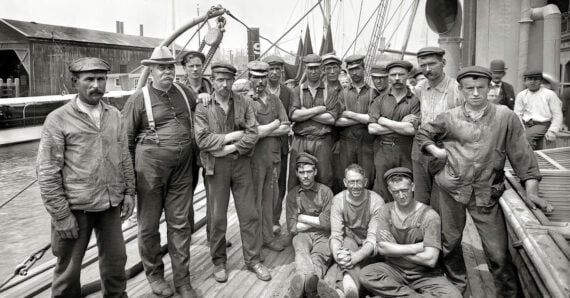
A group of men in work clothes and caps pose on the deck of a ship, some standing and others sitting, with industrial buildings and equipment visible in the background. The photo is black and white and appears historic.

Working-class Americans played a central role in the nation’s growth during the early 1900s. As factories expanded and cities grew rapidly, millions of workers helped build the industries that shaped the modern economy. While famous figures and major events often dominate history books, everyday working people formed the backbone of American life.

These photographs offer a closer look at the men, women, and children who worked in factories, farms, mines, railroads, and neighborhoods across the country. Together, they provide a fascinating glimpse into the challenges, routines, and realities of working-class America during a transformative era.

1. Factory Workers Beginning Their Shift
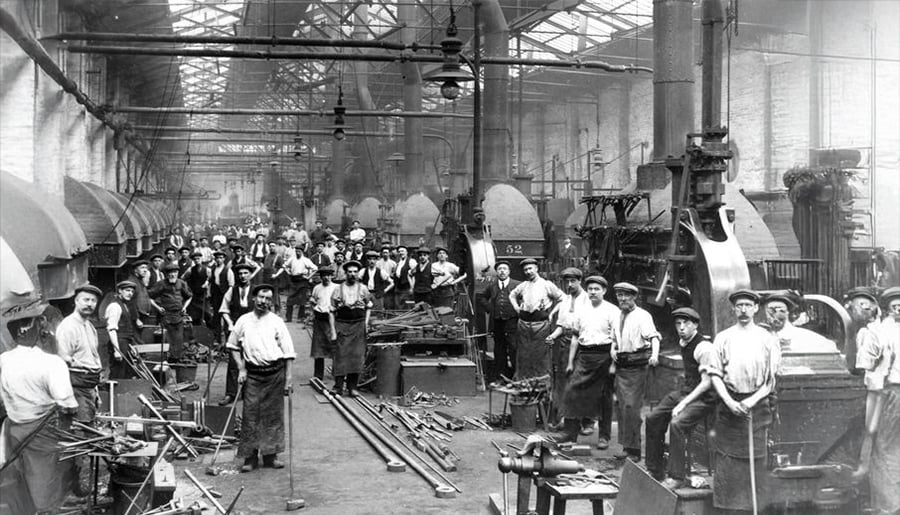
Black and white photo of a busy factory with many workers standing among machinery and tools, wearing work clothes and hats, inside a large, high-ceilinged industrial building.
Irene Grierson / Pinterest.com

Factories employed millions of Americans during the early twentieth century. Long hours and physically demanding work were common, but factory jobs also provided opportunities for many families moving to growing cities.

2. Newsboys Selling Newspapers on Busy Streets

A boy stands outside a large building, holding a stack of newspapers under one arm and shouting, as if calling out headlines. The photo is in black and white.
Darcy / Pinterest.com

Young newspaper sellers became a familiar sight in many American cities. They often worked long hours helping support their families while navigating crowded urban streets.

3. Coal Miners at the End of a Workday
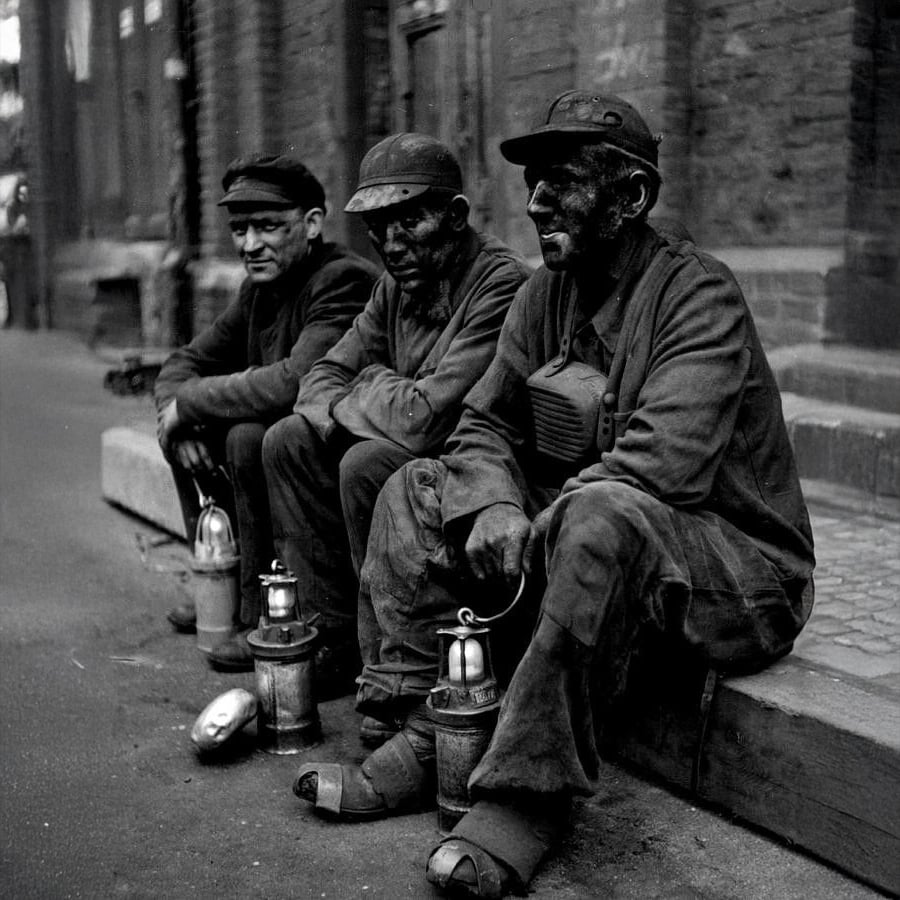
Three coal miners, faces and clothes covered in soot, sit on a curb with their equipment and lanterns, taking a break outside a brick building.
Anonymous / Pinterest.com

Mining was one of the country’s most dangerous occupations. These workers spent long days underground extracting the fuel that powered homes, railroads, and factories.

4. Families Living in Company Housing
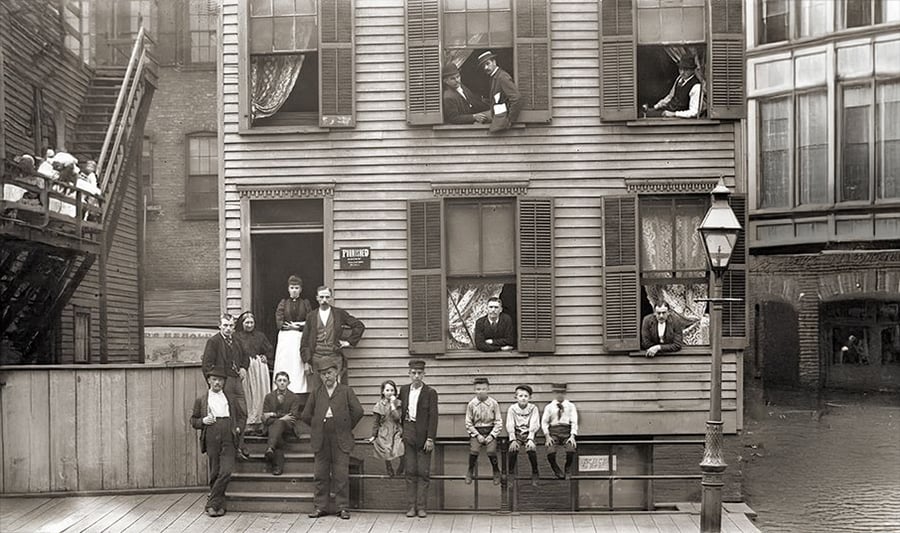
A black-and-white photo of people posing outside and in the windows of a wooden multi-story building in a city. Adults and children stand or sit on stairs, while others lean out of open windows, with city buildings in the background.
Anonymous / Pinterest.com

Many industrial workers lived in homes owned by the companies that employed them. Entire communities often revolved around a single factory, mine, or mill.

5. Women Working in Textile Mills
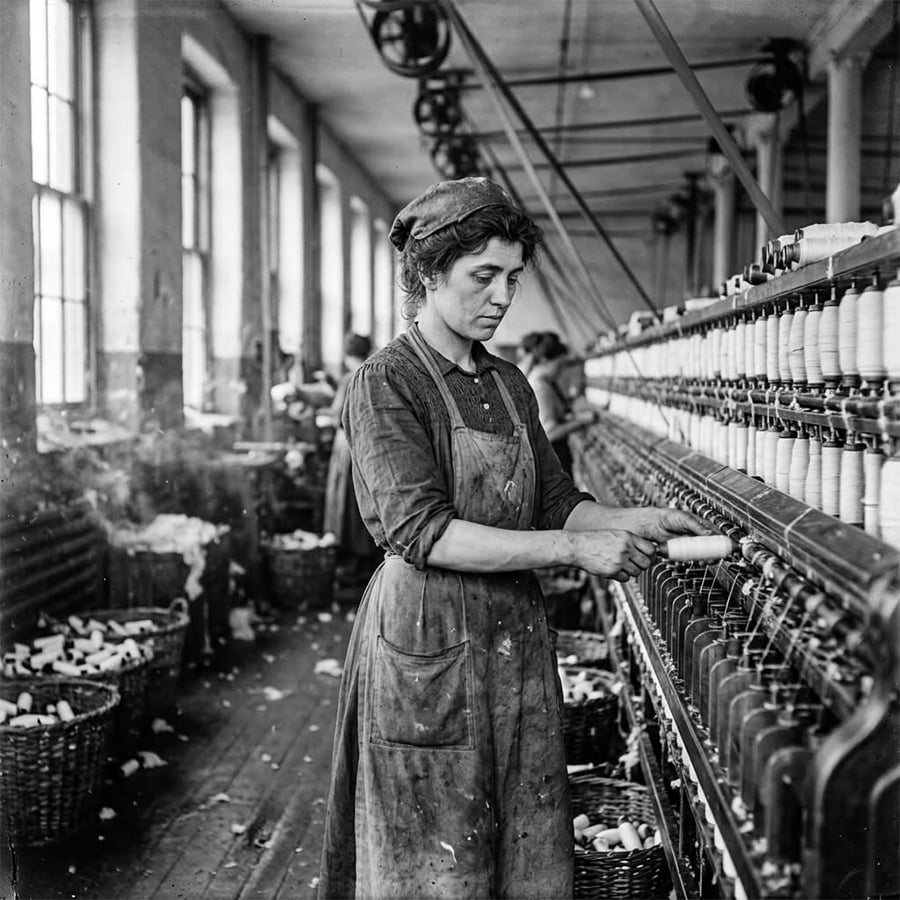
A woman in old-fashioned work clothes operates a spinning machine in a textile factory, surrounded by baskets of spools and large windows, with rows of machinery and workers in the background.
Anonymous / Pinterest.com

Textile factories employed large numbers of women, many of whom spent long hours operating machinery and producing fabrics used across the country.

6. Railroad Crews Keeping America Moving
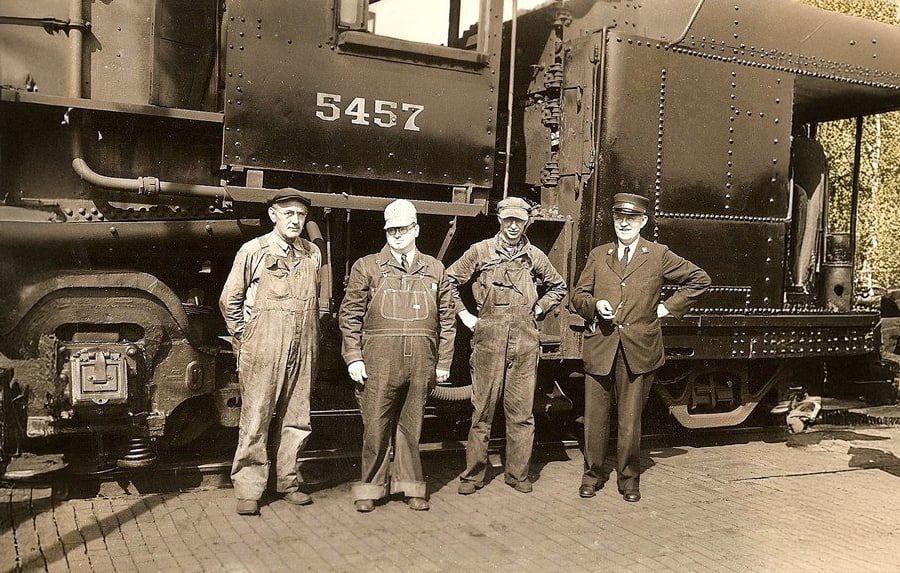
Four men stand in front of a steam locomotive numbered 5457; three wear overalls and work clothes, while one wears a suit and conductor’s hat. The photo appears to be from the early-to-mid 20th century.
Steven Allen / Pinterest.com

Railroads connected cities, transported goods, and helped fuel economic growth. Behind every train was a crew responsible for maintaining schedules and operations.

7. Street Vendors Serving Local Communities
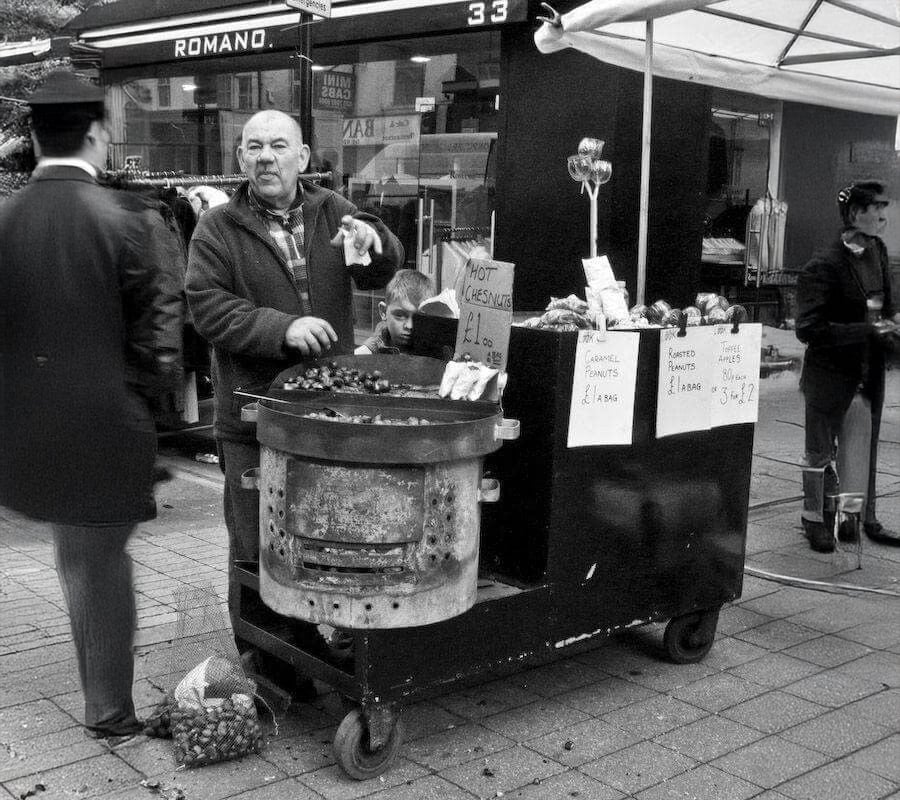
A man stands behind a street cart selling roasted chestnuts, with signs and prices displayed. He gestures while talking to a customer. Another man and a child are nearby, and a shop named "ROMANO" is in the background.

Steve Moriarty
/ Pinterest.com

Many immigrants and working-class families earned a living selling food, produce, and household goods directly from carts.

8. Children Helping With Farm Work
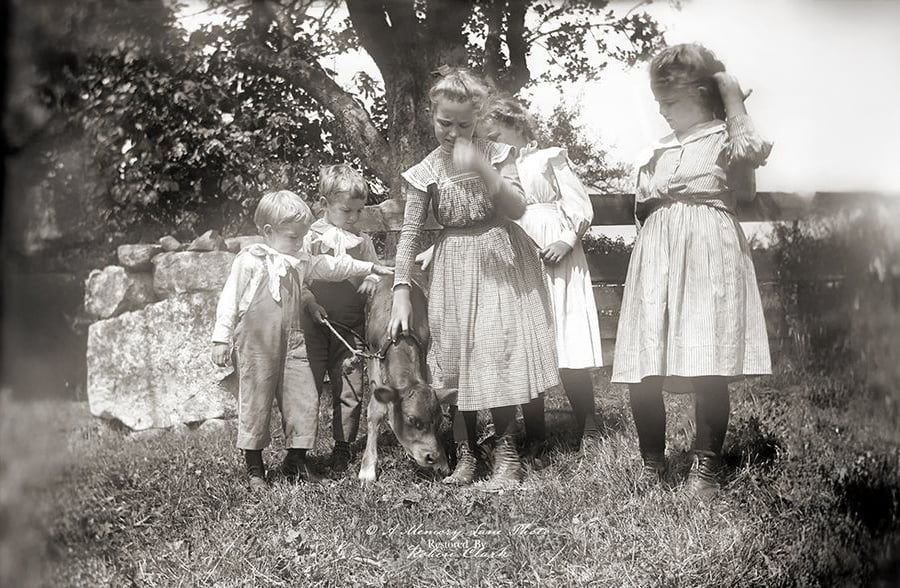
Four children dressed in old-fashioned clothing stand around a small calf in a grassy yard, shaded by trees, with a stone fence in the background. Two girls pet the calf while the others look on.
Memory Lane Photo Restoration / Pinterest.com

In rural America, children often contributed to daily farm tasks from an early age. Family labor played a major role in agricultural life.

9. Crowded Factory Floors

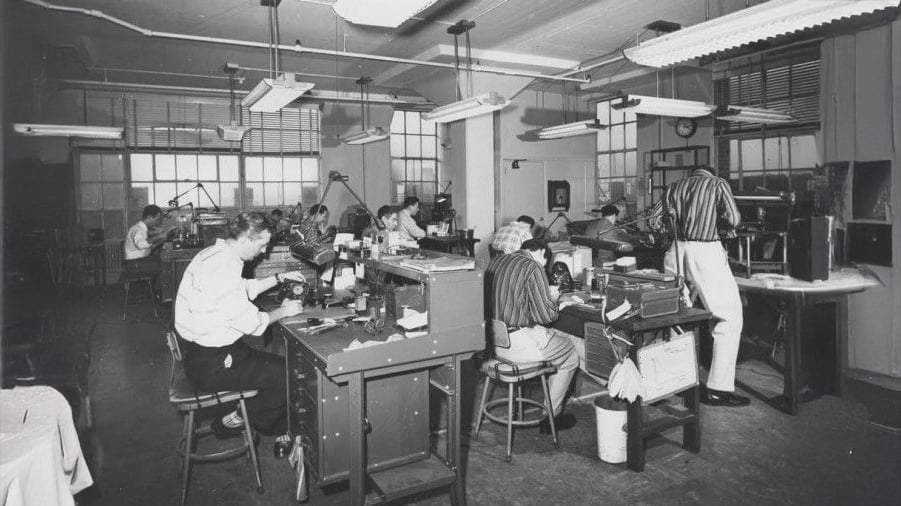
Black and white photo of people working at desks in a factory or workshop, each focused on various tasks. The room is filled with equipment, tools, and overhead lights, with windows lining the back wall.
Anonymous / Pinterest.com

Mass production transformed manufacturing during this period. Large factories brought together hundreds of workers performing specialized tasks.

10. Dock Workers Loading Cargo
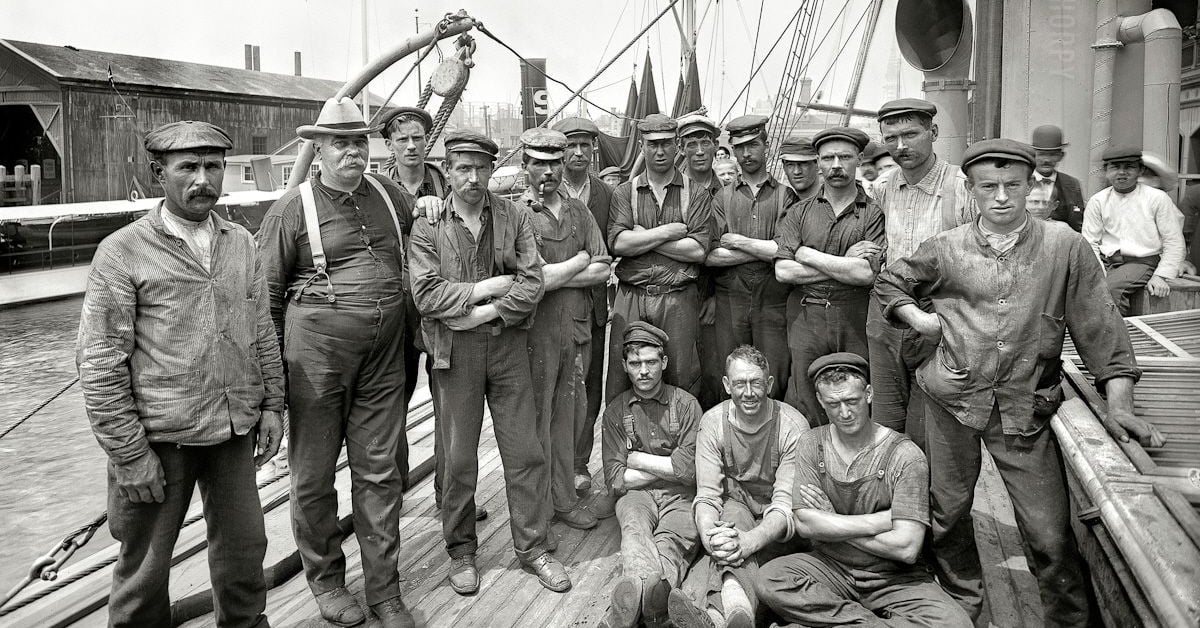
A group of men in work clothes and hats pose for a photo on the deck of a boat at a dock. Some stand with arms crossed, while a few sit on the wooden deck. Industrial buildings are visible in the background.
Anomymous / Pinterest.com

Ports were bustling centers of activity where workers loaded and unloaded goods arriving from around the world.

11. Families Shopping at Neighborhood Markets
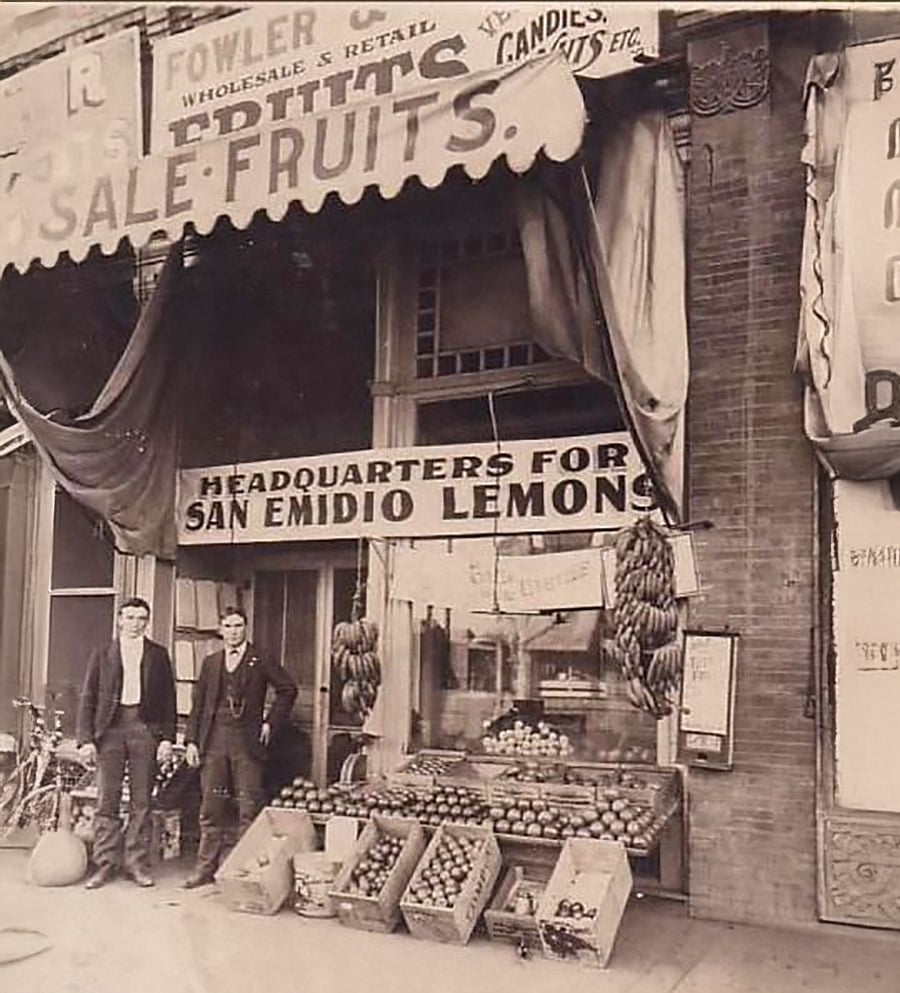
Two men stand outside a vintage storefront with fruit displays and a sign reading "Headquarters for San Emidio Lemons." Bananas and crates of fruit are arranged on the sidewalk; awnings and signs hang above.
AncientFaces.com / Pinterest.com

Before supermarkets, many working-class families purchased food from local markets and small neighborhood businesses.

12. Steelworkers at Industrial Plants
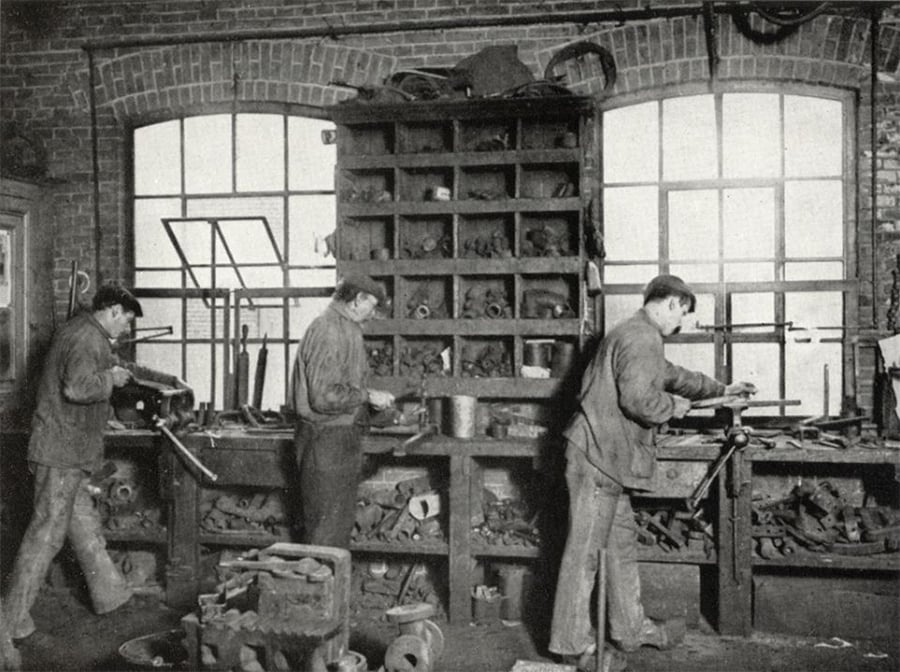
Three men work at a cluttered workbench in a workshop with brick walls and large windows, using tools and surrounded by shelves filled with various mechanical parts.
Ada Pouw-Agterberg / Pinterest.com

The steel industry played a major role in building railroads, bridges, and skyscrapers across the nation.

13. Immigrant Families Building New Lives
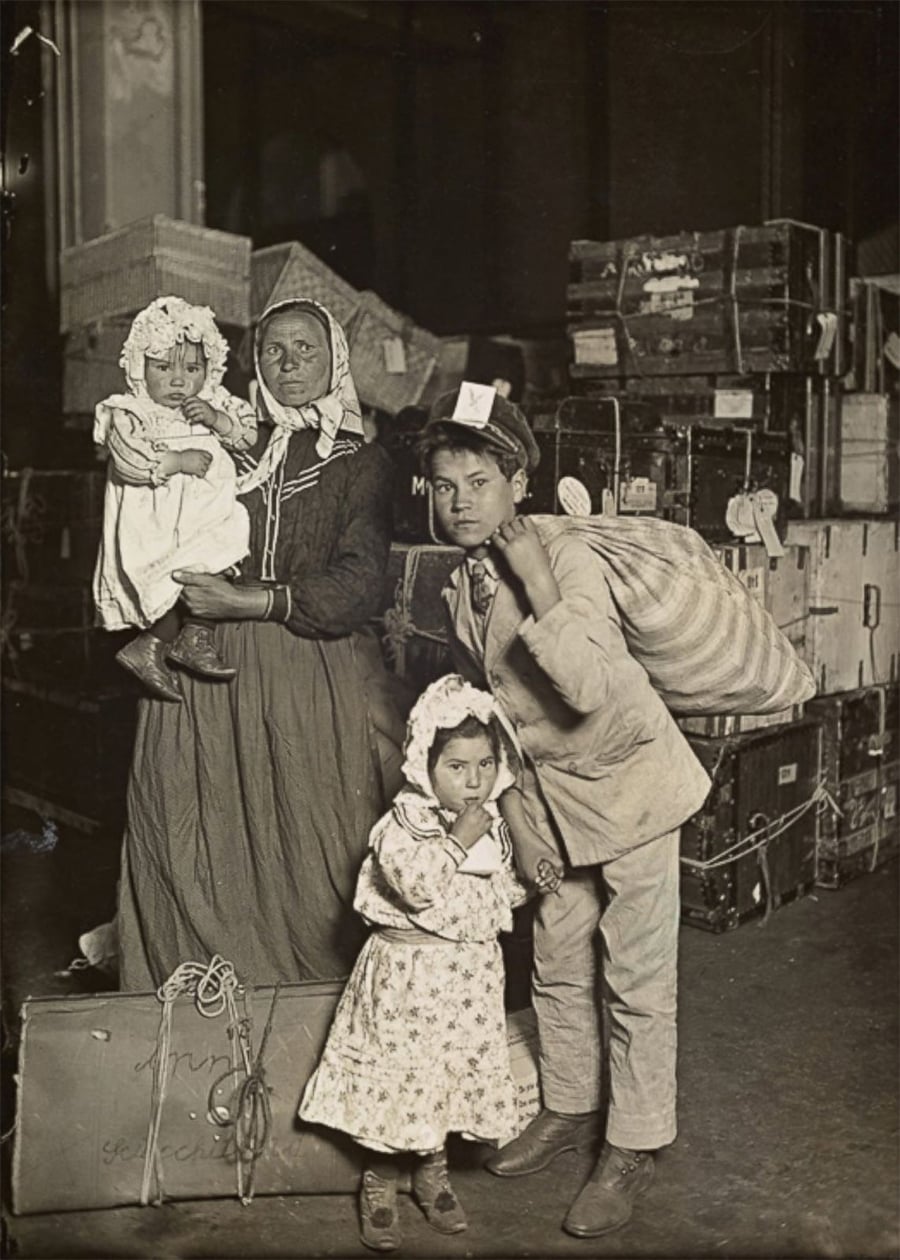
A historical black-and-white photo shows a woman holding a baby, a young man with a sack over his shoulder, and a little girl, all standing in front of stacked luggage, possibly at an immigration station.
Loretta Cukale / Pinterest.com

Millions of immigrants arrived seeking opportunity and often found work in factories, construction, and manufacturing.

14. Construction Workers Shaping Growing Cities
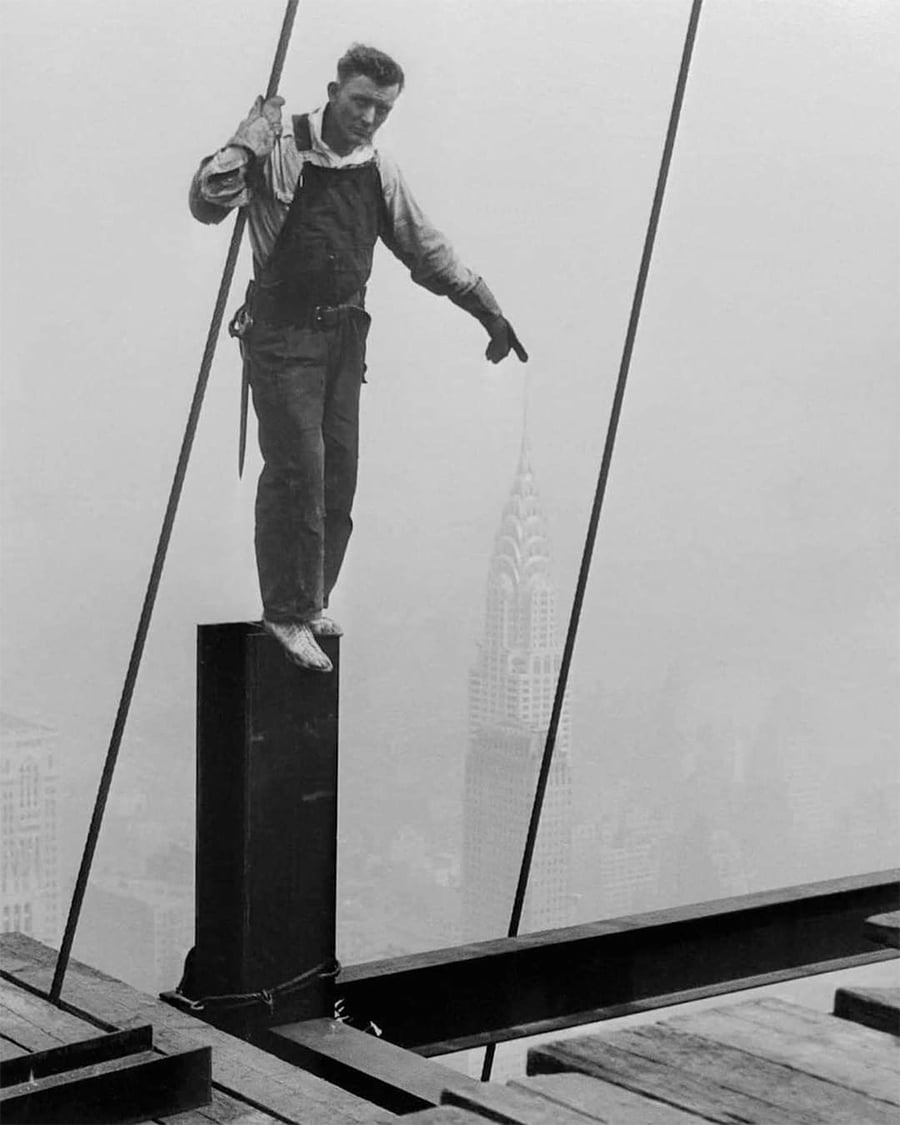
A construction worker balances on a steel beam high above the city with the Chrysler Building visible in the foggy background. He points downward, holding onto a rope for support.
Dan Sorki / Pinterest.com

Rapid urban growth created demand for workers who built roads, office buildings, apartments, and public infrastructure.

15. Laundry Workers Handling Mountains of Clothing
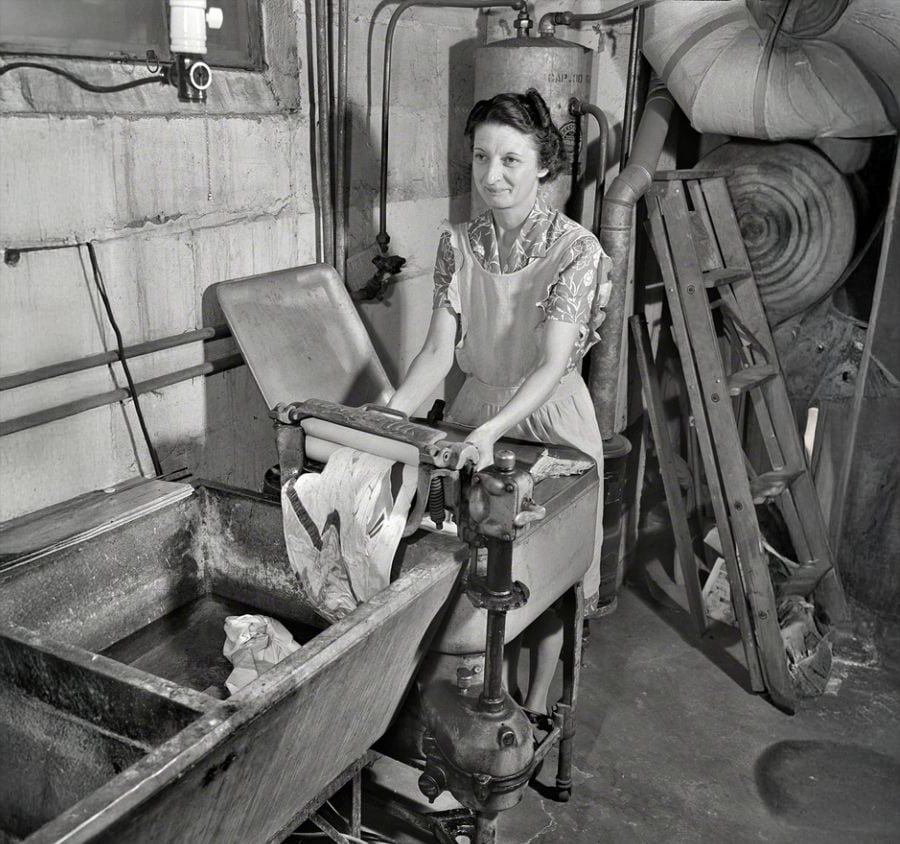
A woman wearing an apron uses a vintage wringer washing machine in a basement laundry room with pipes, a large sink, and utility items in the background.
Anonymous / Pinterest.com

Commercial laundries employed large numbers of workers before home appliances became widespread.

16. Factory Whistles Marking the Day
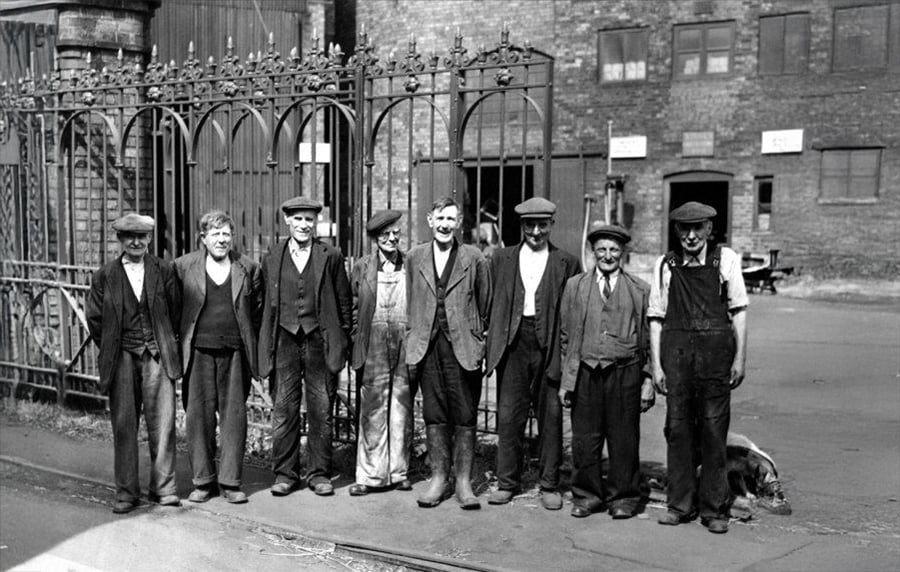
Eight men in work clothes and flat caps stand in a line outside an iron gate, with industrial brick buildings in the background; the scene appears to be from the early 20th century.

For many workers, daily schedules revolved around factory whistles that signaled the beginning and end of shifts.

17. Families Gathering on Apartment Stoops
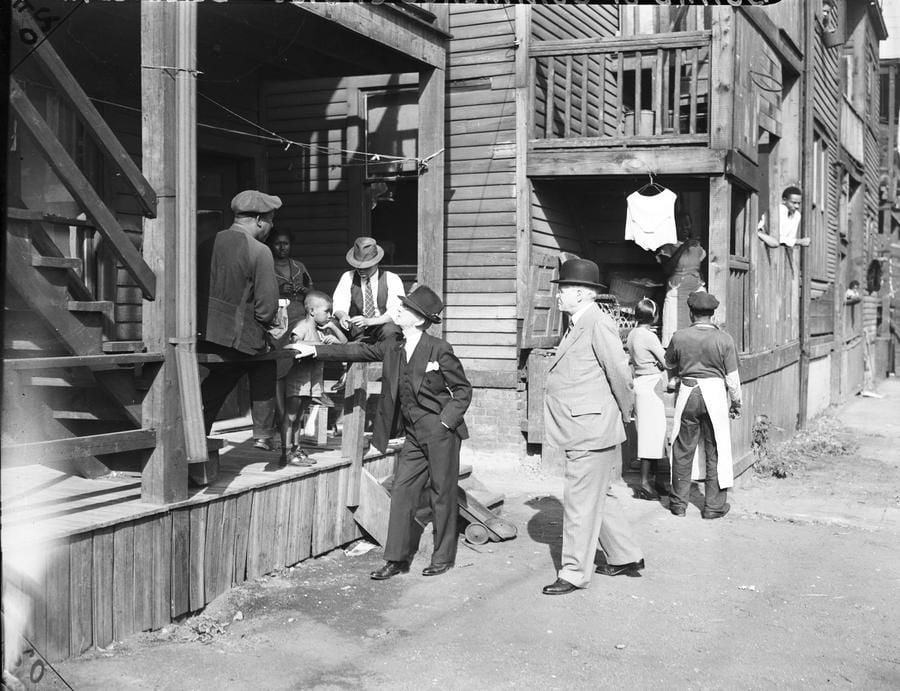
A black-and-white photo shows men in suits and hats talking on a dirt street, while families and children gather outside wooden apartment buildings with balconies, porches, and laundry hanging overhead.
Anonymous / Pinterest.com

In crowded urban neighborhoods, stoops and sidewalks often served as gathering places where neighbors socialized after work.

18. Workers Posing for a Rare Photograph
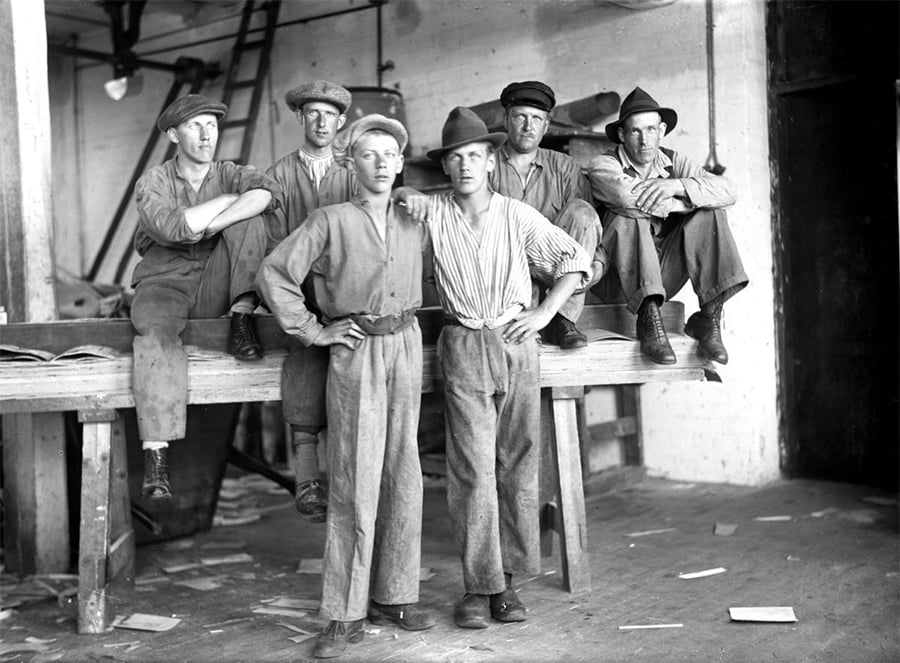
Six men in work clothes and hats pose for a black-and-white photo inside an industrial workshop, with four sitting and two standing in front of a wooden bench. Tools and scattered papers are visible in the background.
Hanna Lehmusto / Pinterest.com

Because photography was less common than it is today, many workers viewed having their picture taken as a special occasion.

Keep Reading About Working-Class Life and Everyday Jobs

  • The Vanishing Middle-Class Job: Then and Now
    Many jobs that once provided stable middle-class incomes have changed dramatically over time. This look back explores how the American workforce has evolved across generations.
  • Vintage Photos of Mailmen
    These historic images capture the mail carriers who connected communities long before email and smartphones transformed communication.

Meet the Writer

Tatiana is a graphic designer specialized in marketing, with over 15 years of experience in the digital marketing world. Throughout her career, she’s worked with a variety of brands, developing strategies that blend creativity, identity, and results and loves to churn out refreshingly engaging content for audiences across many content realms at the same time. Find her on Behance at, tatianaalalach, as well.