Holiday tables in the 1960s and 1970s were filled with dishes that were meant to impress but often missed the mark. Between gelatin molds, questionable flavor combinations, and an obsession with convenience foods, many holiday classics were more about appearance than taste. While some of these recipes are remembered fondly out of nostalgia, others make you wonder how they ever became festive staples in the first place.
1. Lime Gelatin Salad

This bright green lime gelatin salad was a staple of holiday tables throughout the 1960s and 1970s, praised more for its appearance than its taste. Often packed with unexpected ingredients like fruit, marshmallows, or even vegetables, it was meant to feel festive and modern. In reality, the sweet and artificial lime flavor paired with odd textures left many guests politely taking small portions. Today, it stands as one of the clearest examples of how mid-century holiday food prioritized novelty over actual enjoyment.
2. Vegetable Aspic

Vegetable aspic was one of the more ambitious holiday dishes of the 1960s and 1970s, designed to impress guests with its glossy, jewel-like appearance. Packed with suspended vegetables like tomatoes, peppers, zucchini, and onions, it was meant to feel sophisticated and elegant. Unfortunately, the cold gelatin texture combined with savory vegetables often made it more visually striking than enjoyable to eat. Today, it’s remembered as a classic example of mid-century experimentation that valued presentation far more than flavor.
3. Ambrosia Salad

Ambrosia salad was a holiday staple throughout the 1960s and 1970s, often presented as a light, refreshing dessert that felt festive and indulgent. Made with canned fruit, marshmallows, coconut, and whipped cream, it was more about sweetness and nostalgia than balance or texture. While it looked colorful and cheerful on the table, the overly sugary combination quickly became overwhelming after a few bites. Today, it’s remembered as a classic example of how mid-century holiday food often prioritized novelty over actual flavor.
4. Pineapple-Glazed Ham

Pineapple-glazed ham was a centerpiece of many holiday tables in the 1960s and 1970s, prized more for its presentation than its flavor. The combination of sugary glaze, canned pineapple rings, and maraschino cherries often pushed the dish firmly into overly sweet territory. While it looked festive and impressive when first served, the sweetness tended to overpower the meat itself. Today, it’s often remembered as a classic example of how mid-century holiday cooking leaned heavily on sugar and spectacle rather than balance.
5. Tuna Noodle Casserole

Tuna noodle casserole was a staple of holiday gatherings in the 1960s and 1970s, valued mainly for being cheap, filling, and easy to prepare. Made with canned tuna, egg noodles, peas, and condensed cream soup, it leaned heavily on mushy textures and bland flavors. While it was marketed as comforting and practical, the dish often felt more like a compromise than a celebration-worthy meal. Today, it’s remembered as one of those retro holiday foods that people ate out of tradition rather than genuine enjoyment.
Trending on Wealth Gang


6. Deviled Eggs

Deviled eggs were a must-have at holiday parties throughout the 1960s and 1970s, praised for being easy to make and visually impressive on a serving tray. Despite their popularity, the flavor was often underwhelming, relying heavily on mayonnaise and lacking much complexity. While some versions tried to elevate them with paprika or pickles, they rarely lived up to the hype surrounding them. Today, deviled eggs are remembered more for their nostalgia and presentation than for being a truly standout holiday dish.
7. Cheese Ball

Cheese balls were a centerpiece of holiday tables in the 1960s and 1970s, often rolled in nuts or herbs to look festive and indulgent. Despite their impressive appearance, the flavor usually boiled down to an overwhelming mix of cream cheese and mild seasonings. While they paired well with crackers, the taste rarely justified the attention they received. Today, cheese balls are remembered as more of a retro party gimmick than a truly satisfying holiday food.
8. Cocktail Sausages (Little Smokies)

Cocktail sausages were a holiday staple in the 1960s and 1970s, usually simmered in sugary sauces made with ketchup, grape jelly, or brown sugar. While they were easy to prepare and endlessly refillable, the flavor was often one dimensional and overwhelmingly sweet. Their popularity had more to do with convenience than taste, making them a fixture at parties despite being far from memorable. Today, they’re remembered as a nostalgic crowd filler rather than a genuinely great holiday dish.
Sign up for our newsletter
9. Creamed Chipped Beef on Toast

A staple of mid-century American kitchens, this dish paired dried beef with a thick, flour-heavy white sauce poured over toast. It was inexpensive, filling, and wildly popular during the 1960s and 1970s, especially around the holidays when feeding a crowd mattered more than flavor. While nostalgic for some, many now remember it as bland, overly salty, and far less appetizing than its reputation suggested.
10. Sweet Potato Casserole with Marshmallows

A holiday staple throughout the 1960s and 1970s, this dish blurred the line between side dish and dessert. Mashed sweet potatoes were topped with sugar, butter, cornflakes or pecans, and finished with a thick layer of toasted marshmallows. While it looked festive on the table, many found it overwhelmingly sweet and oddly placed next to savory holiday mains. Today, it’s often remembered as one of the era’s most confusing and overhyped holiday dishes.
11. Pâté en Croûte

This elegant looking dish became a holiday status symbol in the 1960s and 1970s, especially at upscale Christmas dinners. A rich liver pâté baked inside a thick pastry crust, it was meant to signal sophistication and European flair. In reality, many guests found it overly heavy, greasy, and intimidating rather than enjoyable. Despite its impressive presentation, it often ended up being admired more than actually eaten, earning its place as one of the era’s most overrated holiday showpieces.
12. Cranberry Gelatin Salad

A staple at mid-century holiday tables, this bright red gelatin ring was meant to add color and a touch of sophistication to Christmas spreads in the 1960s and 1970s. Made with cranberry sauce, gelatin, and sometimes unexpected additions like nuts or celery, it looked festive but confused most guests once served. The rubbery texture and overly sweet-tart flavor made it more decorative than enjoyable. Despite its popularity, it’s now remembered as one of the most puzzling and overrated holiday side dishes of the era.
13. Cheese-Stuffed Celery Sticks

Once considered a lighter, “sophisticated” holiday appetizer in the 1960s and 1970s, these celery sticks stuffed with cream cheese and topped with shredded cheddar showed up at countless Christmas parties. The idea was balance and crunch, but the execution often fell flat. Watery celery paired with heavy dairy created a strange texture contrast that few actually enjoyed. While they looked neat on a platter, they’re now remembered as more of a mandatory party filler than a genuinely loved holiday bite.
14. Shrimp Christmas Tree Appetizer

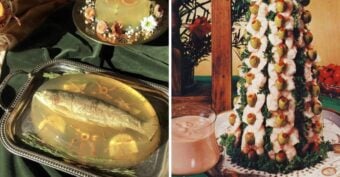
Holiday hosts in the 1960s and 1970s loved turning party food into edible centerpieces, and this shrimp “Christmas tree” was a prime example. Built by stacking shrimp, olives, and parsley into a cone shape, it looked festive but rarely tasted as impressive as it appeared. Cold shrimp, bland presentation, and an awkward eating experience made it more decorative than enjoyable. Today, it’s remembered as a perfect snapshot of an era when visual impact mattered far more than flavor at the holiday table.
15. Fish in Aspic
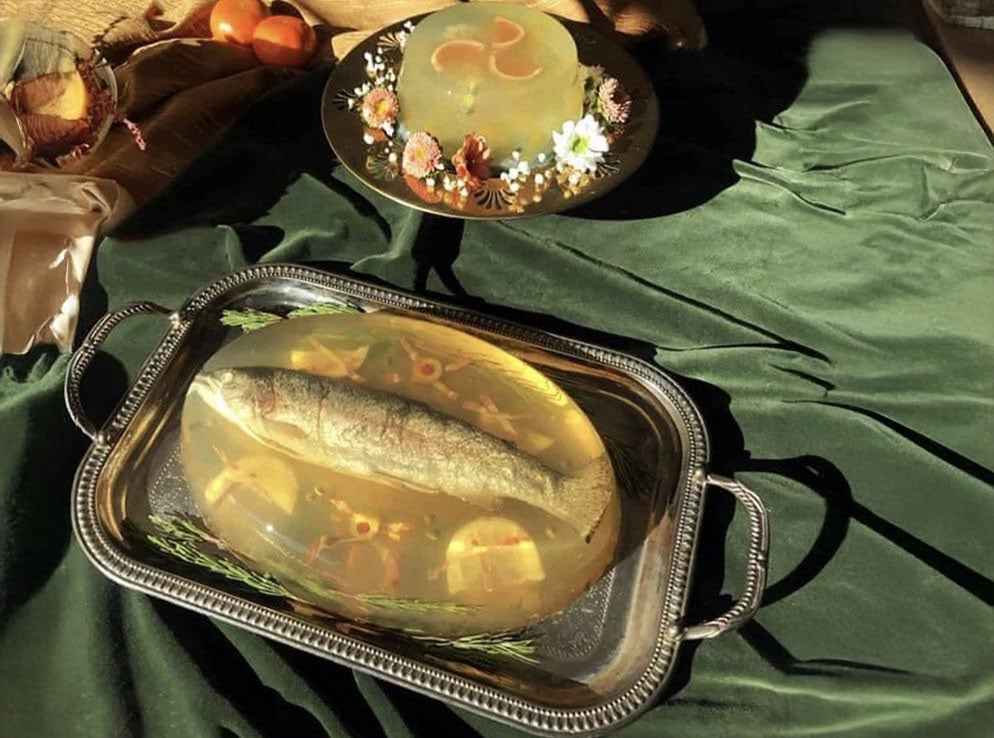
Once considered the height of elegance in mid-century holiday entertaining, fish suspended in clear gelatin was meant to impress guests before they even took a bite. In reality, the cold, rubbery texture and faintly fishy aroma made it more intimidating than appetizing. While it looked sophisticated on the table, fish in aspic was one of those dishes people admired from a distance—and quietly avoided once dinner actually began. Today, it stands as one of the most infamous examples of how presentation once outweighed taste during 1960s and 1970s holiday meals.
More Holiday Reads Worth Your Time
- 15 of the Most Expensive-to-Make Holiday Movies
A contemporary look at holiday films with shockingly high production budgets, from big stars to massive sets. This list adds a fun pop-culture twist to holiday season reading and pairs nicely with nostalgic food pieces because it taps into how celebrations get big on screen and at the table. - 18 Holiday Shopping Traditions From Before Online Deals Took Over
A recent article exploring how people used to prepare for the holidays before internet shopping changed everything. From mall excursions to wrapped presents under the tree weeks in advance, this piece gives readers context about how holiday culture has evolved over time.
- 20 Holiday Traditions Boomers Remember That Gen Z Has Never Even Seen
A fresh take on holiday rituals that older generations grew up with that feel almost foreign today, blending nostalgia, culture, and seasonal fun — perfect for readers who enjoyed a throwback article about vintage holiday foods.