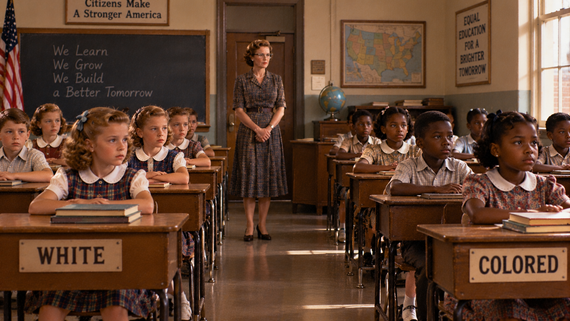
School in the 1950s came with a rulebook that extended far beyond homework and classroom behavior. Students were expected to dress neatly, address teachers with unquestioning respect, and follow routines that left little room for personal expression. A boy with long hair or a girl wearing pants could find themselves in trouble before the first lesson even began.
For many Americans who grew up during the decade, these rules were simply part of everyday school life. Teachers carried enormous authority, discipline often happened in front of classmates, and even lunchtime came with expectations. Looking back, some traditions seem charmingly old-fashioned, while others reveal just how much American education has changed.
1. Girls Were Required to Wear Dresses or Skirts
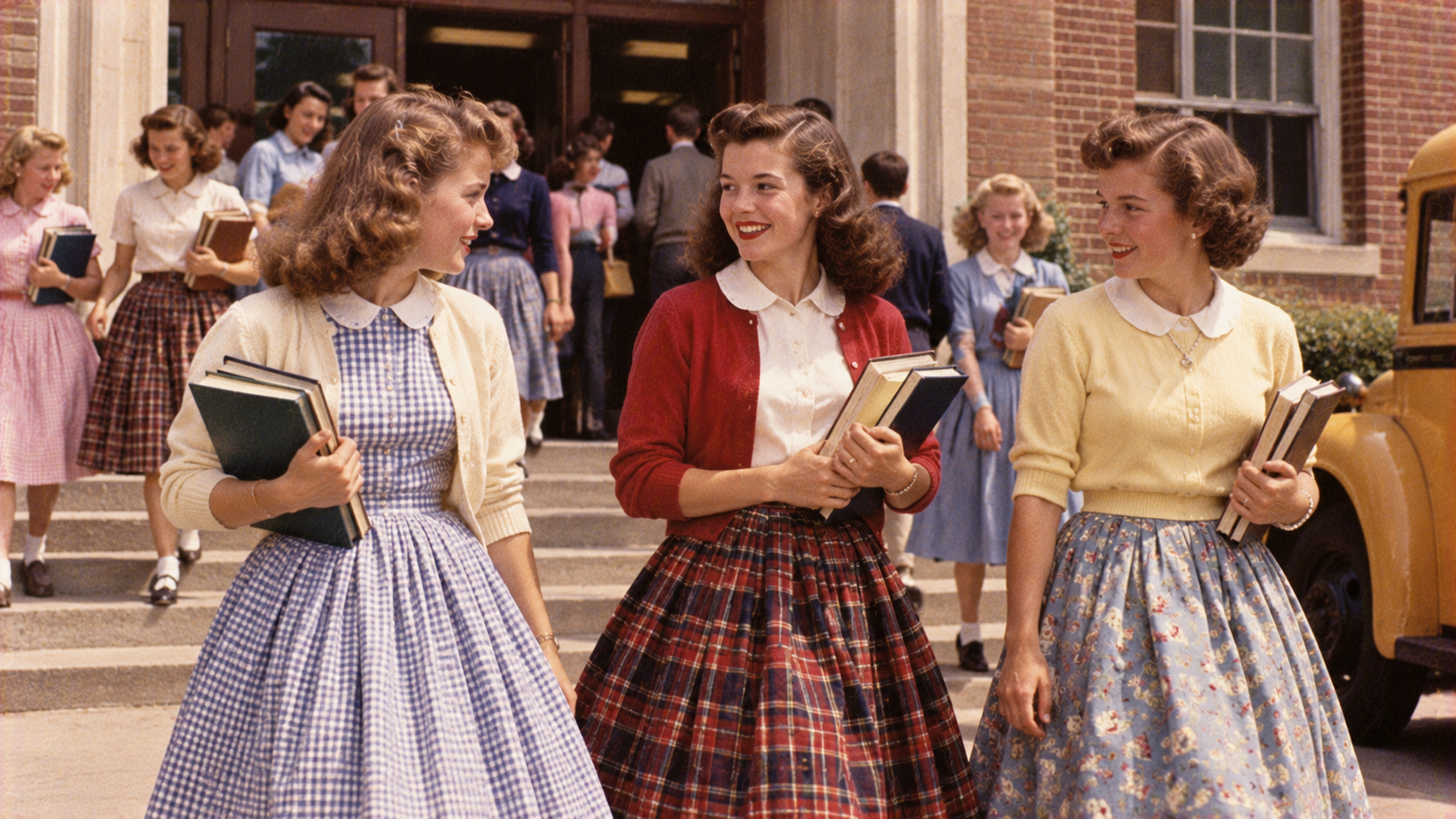
For many schoolgirls in the 1950s, choosing an outfit was hardly a choice at all. Dresses and skirts were standard classroom attire, and some schools explicitly prohibited girls from wearing pants. Even during freezing winter mornings, girls might arrive in skirts with knee socks or stockings. Pants were generally associated with boys, while a neatly pressed dress represented proper femininity. It would take years of changing attitudes and student challenges before girls could routinely wear trousers to school without attracting unwanted attention.
2. Boys Had to Keep Their Hair Short
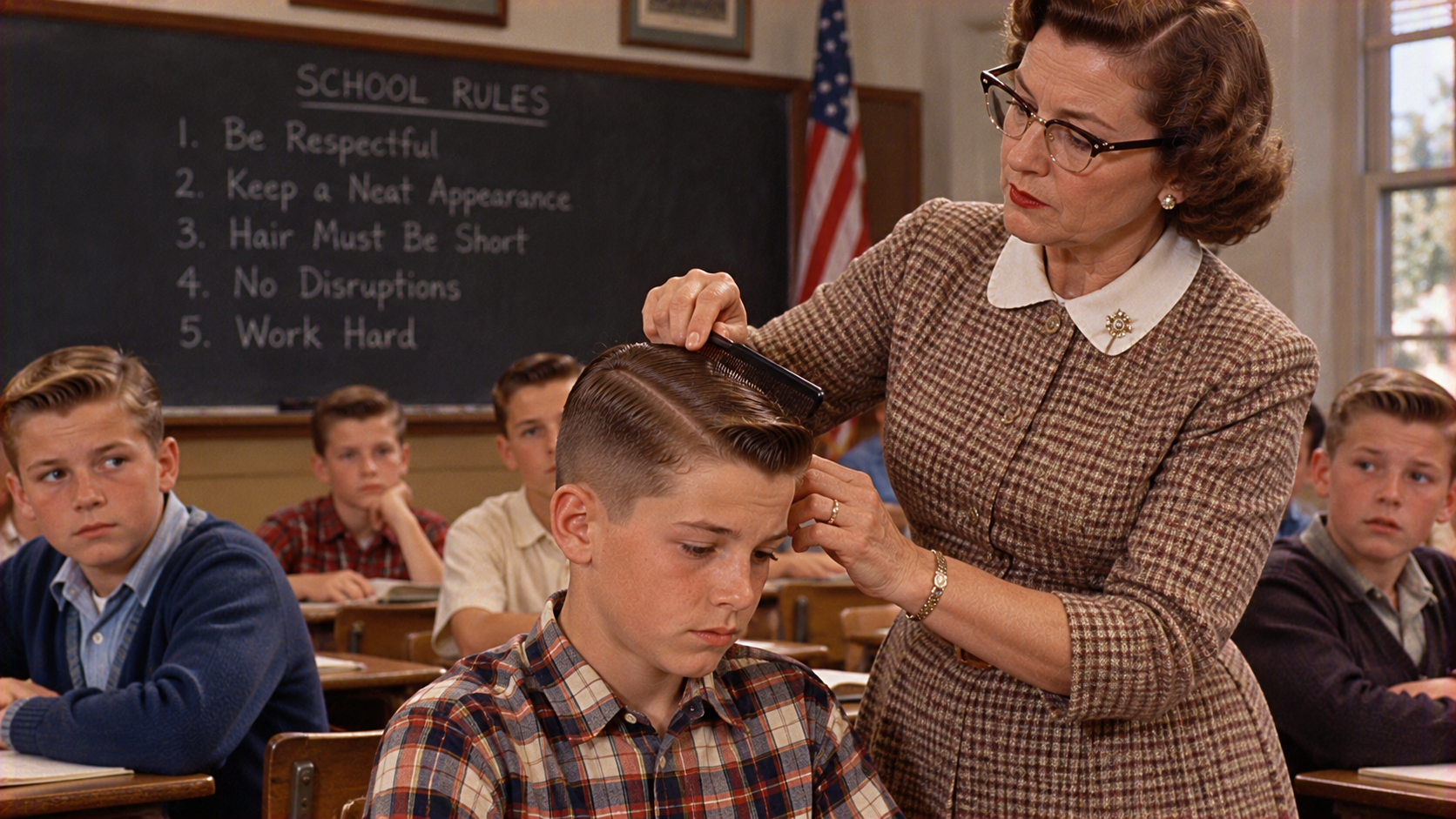
A trip to the barbershop could be just as important as buying new notebooks before school started. Many schools expected boys to maintain short, tidy haircuts, with hair kept away from their ears and collars. Longer hairstyles were often associated with rebellion or poor discipline, even before rock and roll transformed teenage fashion. A boy who showed up with an unconventional haircut might receive a warning or be sent home to have it trimmed. Today, students can express themselves through hairstyles that would have caused quite a commotion in a 1950s classroom.
3. Teachers Could Use Corporal Punishment
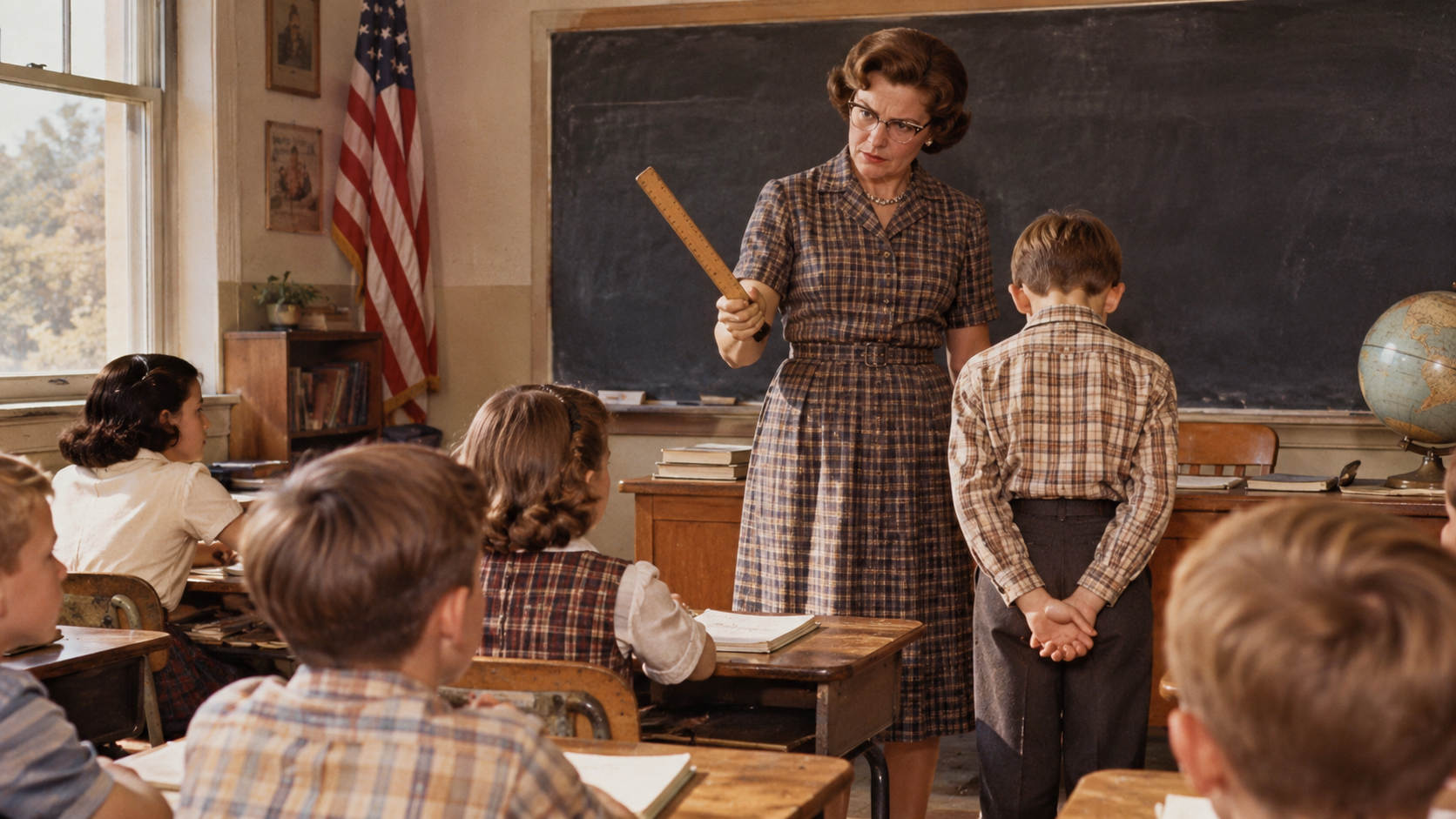
The sound of a wooden paddle striking a desk was sometimes enough to quiet an entire classroom. In many American schools during the 1950s, corporal punishment was an accepted disciplinary practice, and teachers or principals could physically punish students for misconduct. Depending on the school, offenses such as talking back, fighting, or repeatedly disrupting lessons might result in paddling. Some students remember the embarrassment as vividly as the punishment itself. Although corporal punishment has since been prohibited in many states, its widespread acceptance during that era feels startling by modern educational standards.
4. Students Had to Stand When a Teacher Entered
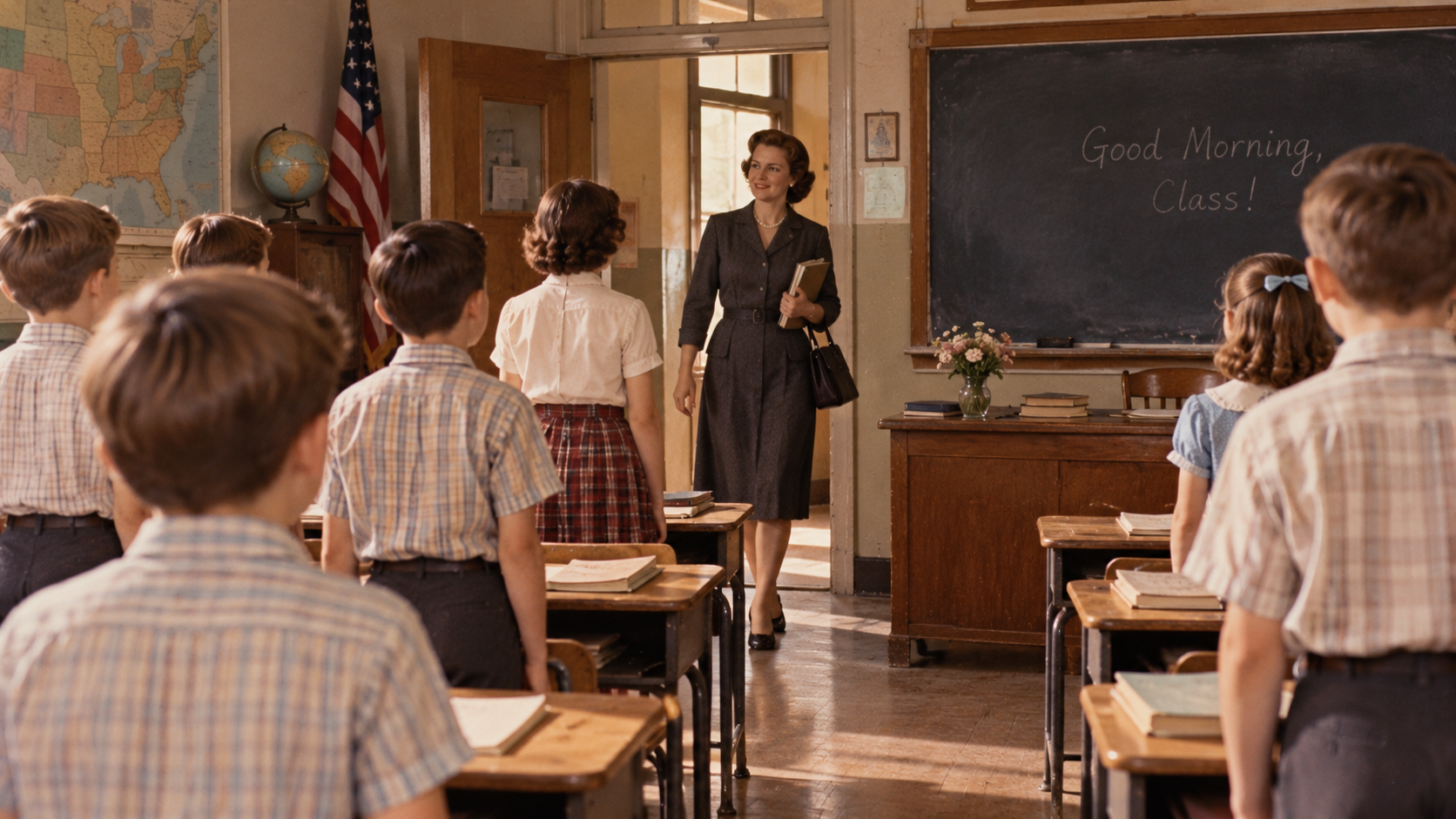
The classroom could fall silent the moment a teacher walked through the doorway. In some schools, students were expected to rise from their seats as a sign of respect and remain standing until instructed to sit. The ritual reflected a time when classroom authority was highly formal and rarely questioned. Teachers were addressed as Mr., Mrs., or Miss, and casual conversation with them was generally discouraged. A student who remained seated or greeted a teacher too informally might be considered disrespectful, even without intending any offense.
5. Talking Without Permission Was Strictly Forbidden
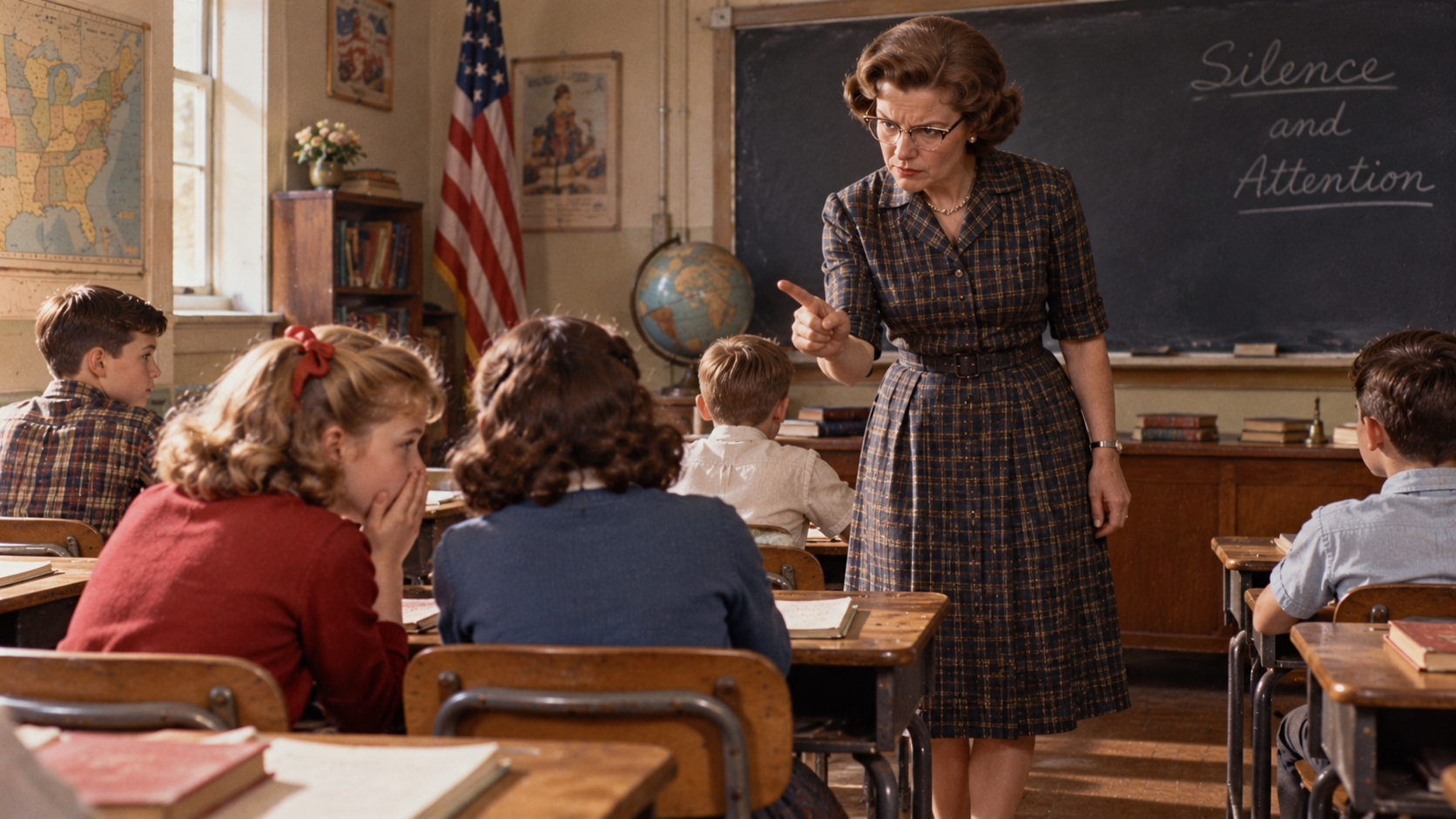
Raising a hand was more than a classroom courtesy in the 1950s. It was often the only acceptable way to speak during lessons. Students were expected to sit quietly, listen carefully, and wait until a teacher called on them. Whispering to a friend, interrupting a lesson, or speaking out of turn could lead to detention or another punishment. Group discussions and collaborative learning were less prominent in many traditional classrooms, where orderly rows of desks reinforced the expectation that students should listen rather than contribute whenever they pleased.
Trending on Wealth Gang


6. Gum Chewing Was Completely Banned
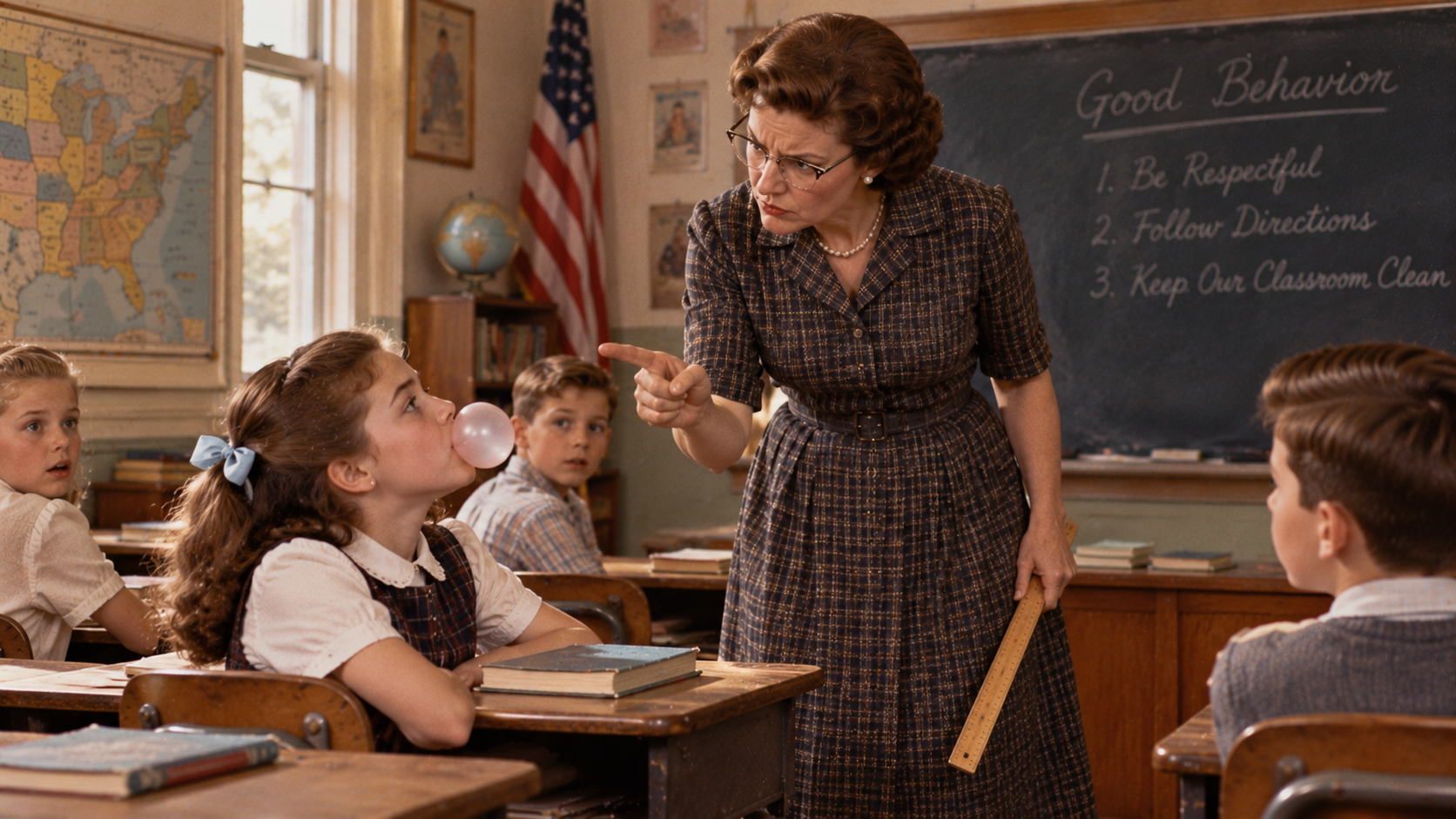
Few things could get a student into trouble faster than being caught chewing gum during class. Teachers worried about sticky surprises underneath desks, distracting bubbles, and the appearance of disrespect. Students developed clever techniques for hiding gum behind their cheeks or quickly swallowing it when a teacher approached. Some schools imposed detention or required offenders to clean desks as punishment. The familiar command to spit it out became part of the school experience for generations of children who thought they could get away with one small piece of chewing gum.
7. Students Could Be Sent Home for Improper Clothing
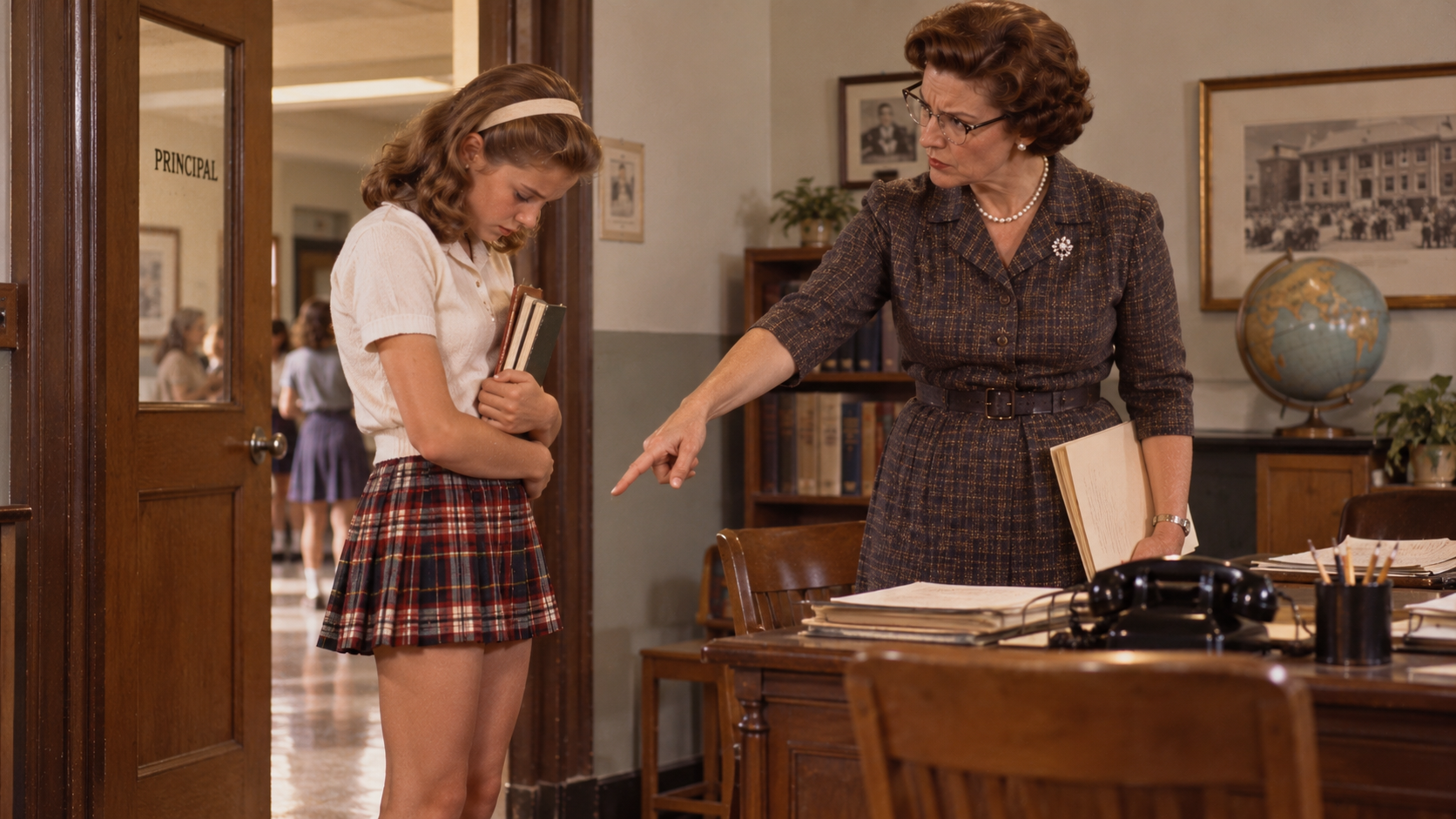
A missing belt, an untucked shirt, or the wrong kind of shoes could turn an ordinary school morning into an embarrassing experience. Dress codes in many 1950s schools emphasized neatness, modesty, and conformity. Boys might be expected to wear collared shirts and appropriate trousers, while girls faced restrictions on skirt lengths and certain accessories. Administrators sometimes sent students home to change if their clothing violated school standards. The idea that a teenager could miss valuable classroom time over an outfit illustrates how seriously appearances were taken.
8. Left-Handed Students Were Sometimes Forced to Write With Their Right Hand
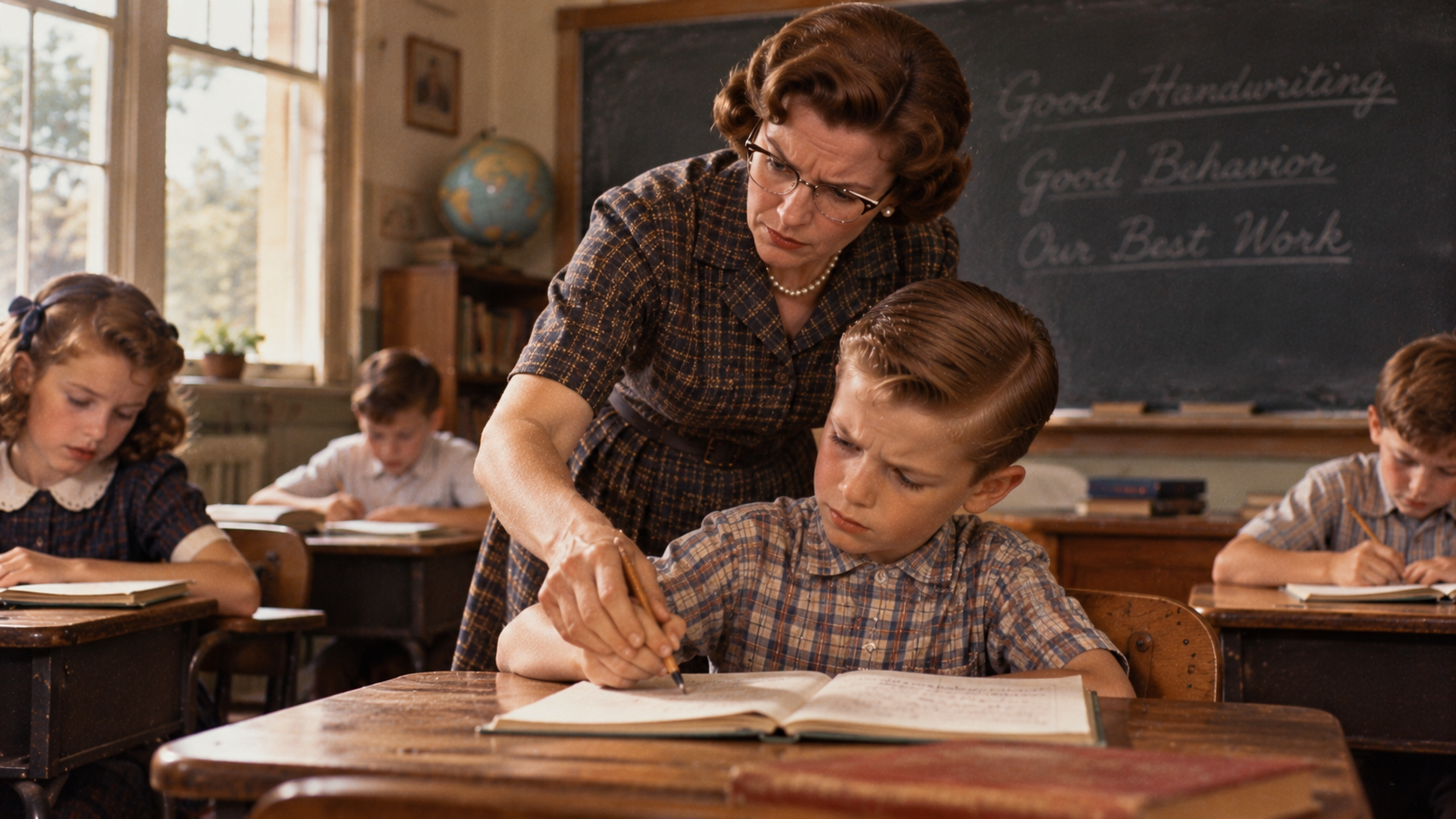
For some left-handed children, learning to write meant struggling against their natural instincts. Although attitudes were changing by the 1950s, certain teachers still discouraged left-handed writing and pressured students to use their right hands instead. Children might have their pencils repositioned or be repeatedly corrected while practicing penmanship. The experience could make an already challenging skill even more frustrating. Today, left-handed students generally receive appropriate accommodations, making the old insistence on right-handed writing seem particularly unnecessary.
Sign up for our newsletter
9. Students Had to Ask Permission to Use the Bathroom
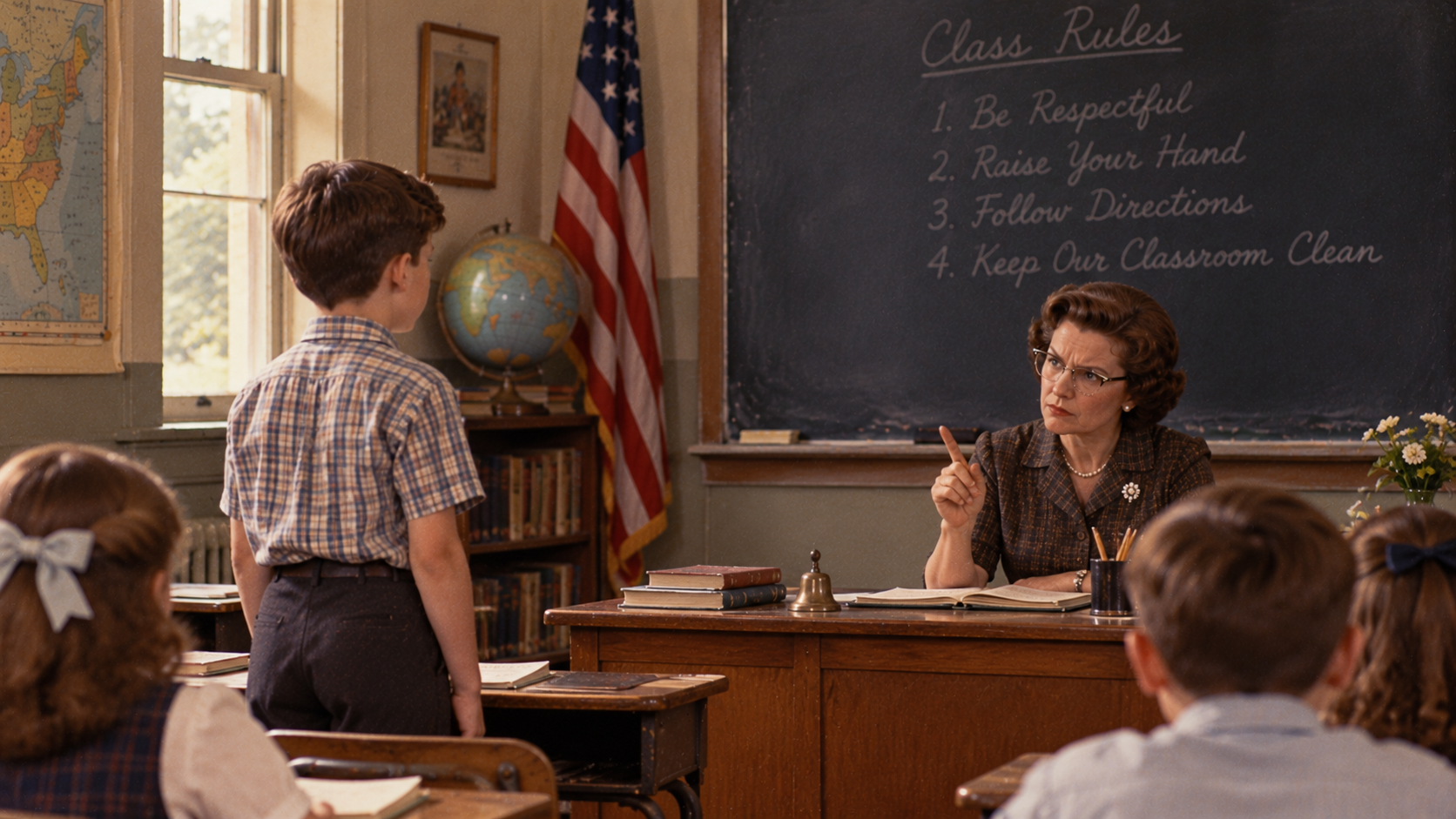
Even a basic trip to the restroom required approval in many 1950s classrooms. Students were expected to raise their hands, explain their needs, and wait for permission before leaving their desks. Some teachers allowed bathroom visits only at designated times, believing that frequent interruptions disrupted lessons. Children who were shy or afraid of being reprimanded sometimes endured considerable discomfort rather than asking. Bathroom permission rules still exist in many schools today, but the strictness of certain midcentury classrooms could make a simple request feel like a major event.
10. Girls Were Often Restricted From Certain School Activities
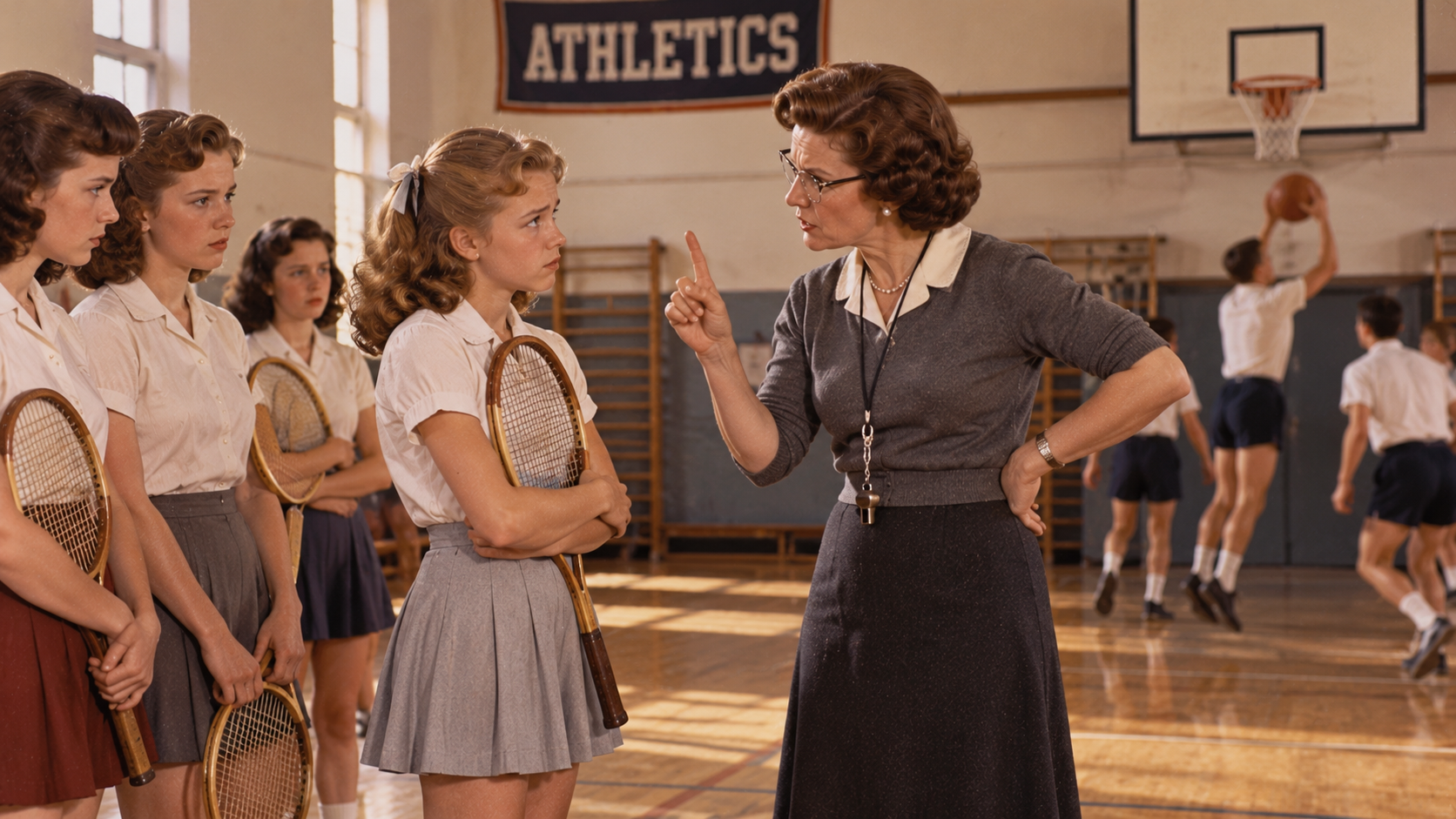
A girl who wanted to take an advanced shop class or join certain athletic activities might discover that the opportunity simply was not available to her. Many schools in the 1950s divided educational experiences according to traditional gender expectations. Boys were encouraged toward woodworking, mechanics, and competitive sports, while girls were often directed toward cooking, sewing, and homemaking. These divisions reflected broader assumptions about future careers and family roles. Students today may find it surprising that personal interests could be limited so openly by gender.
11. Students Were Expected to Memorize Lessons Without Questioning Them
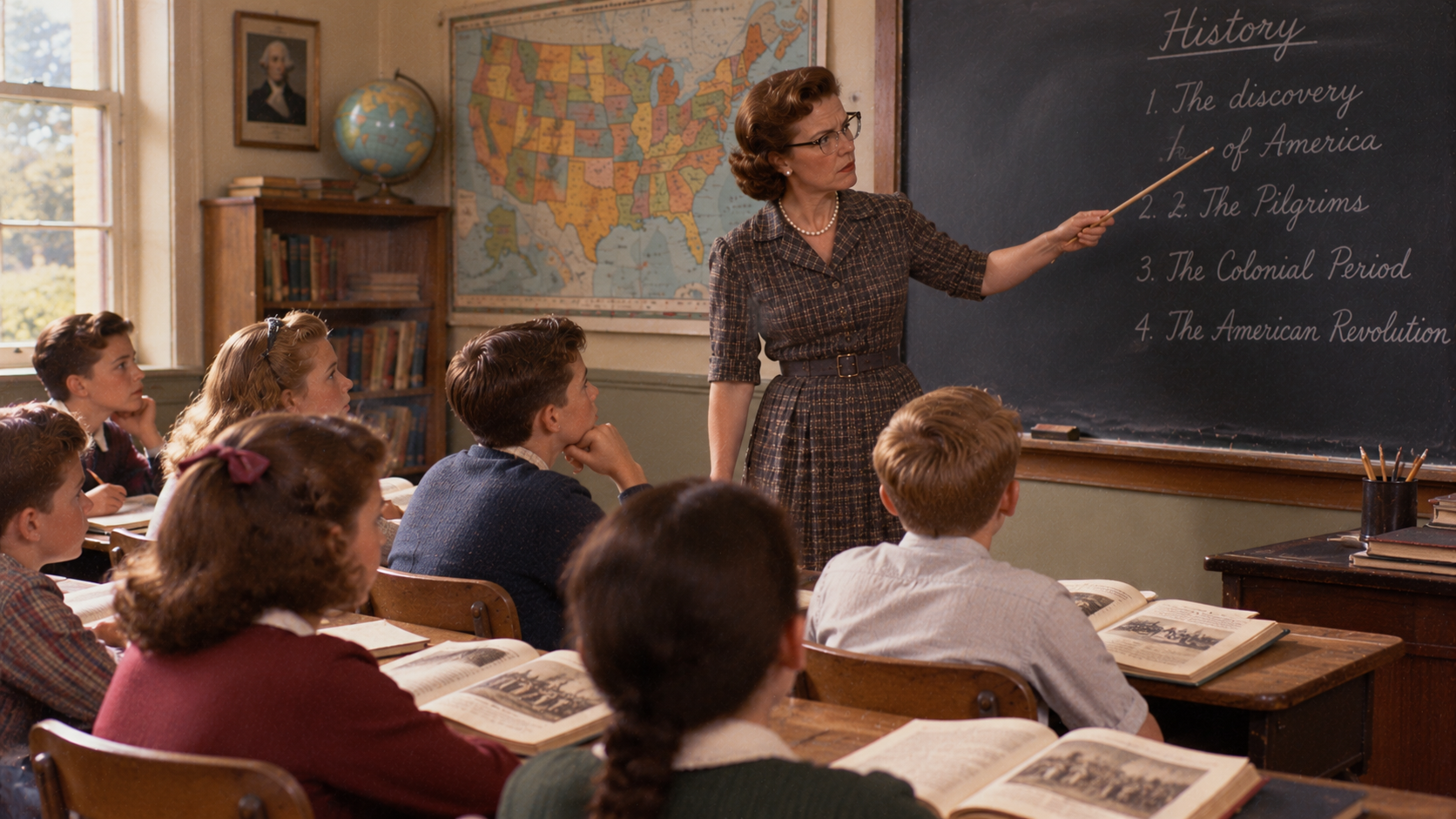
Chalkboards filled with spelling words, multiplication tables, and historical dates were familiar sights in 1950s classrooms. Memorization played a central role in many lessons, and students were frequently expected to repeat information exactly as taught. Teachers might call on children individually to recite passages or answer questions from memory. While memorization remains useful, students often had fewer opportunities to challenge interpretations or explore alternative perspectives. A child who questioned the teacher’s explanation might be viewed as argumentative rather than curious.
12. Passing Notes Could Lead to Public Embarrassment
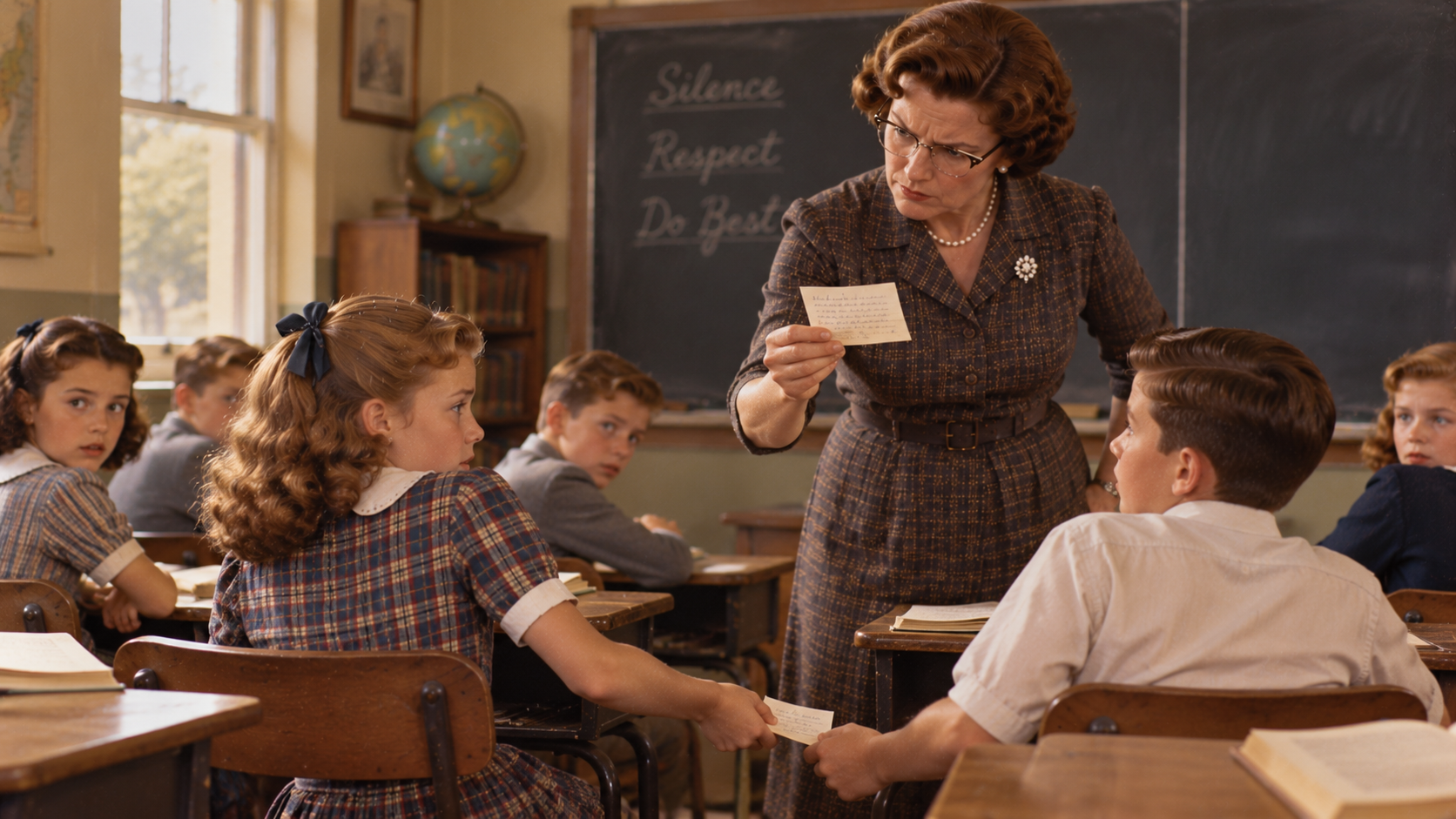
Before text messages, folded pieces of notebook paper carried classroom gossip, secret crushes, and weekend plans. Passing a note during a lesson was risky business, especially when a teacher spotted the exchange. Some teachers confiscated notes and read them aloud, turning a private conversation into entertainment for the entire class. The humiliation could be worse than detention, particularly if the note mentioned someone sitting nearby. Students quickly learned that even the smallest piece of paper could become a major source of embarrassment.
13. Students Had to Walk Quietly and in Orderly Lines
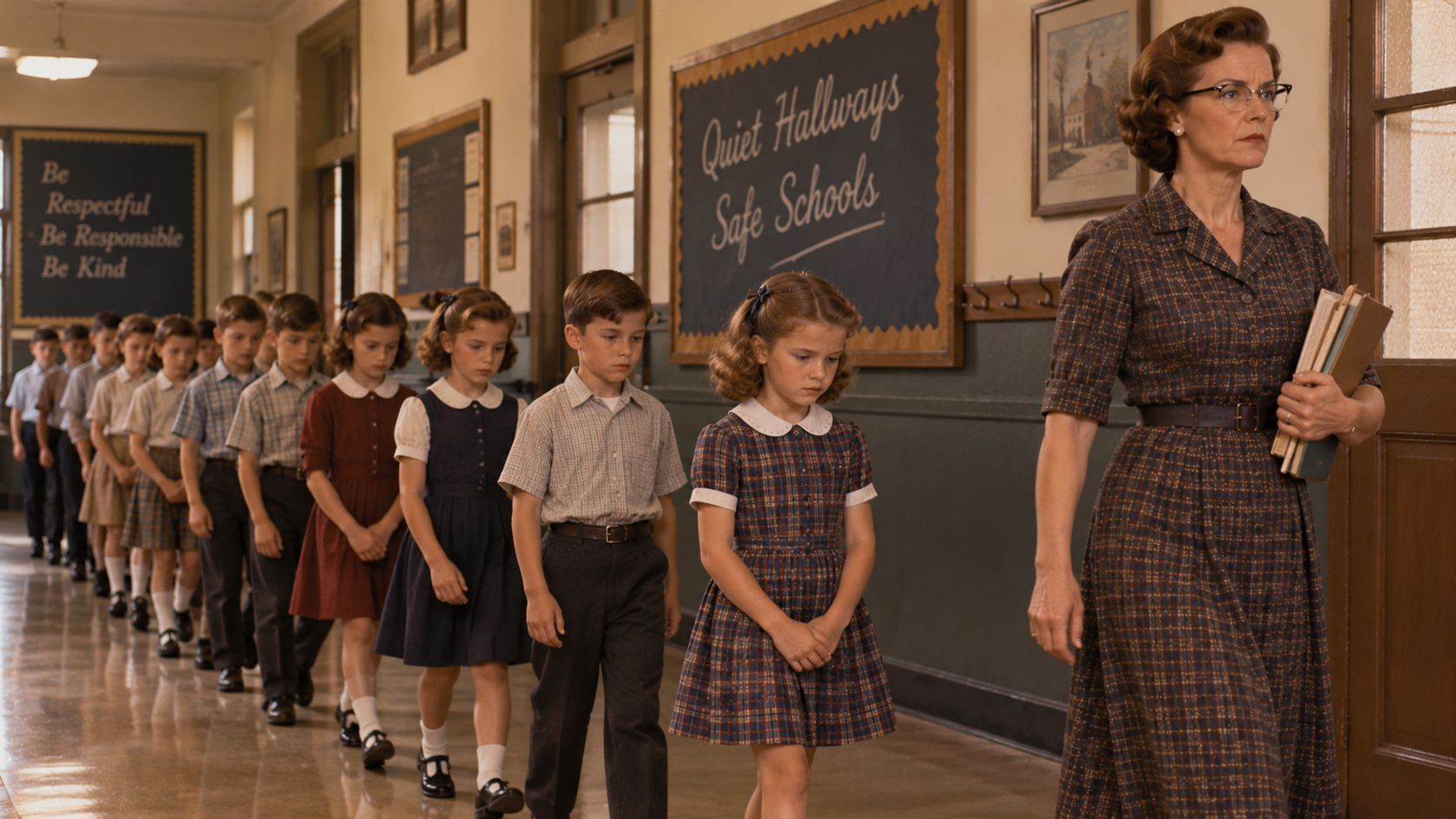
Moving from one classroom to another was not always an opportunity to catch up with friends. In many elementary schools, children were expected to form straight lines, keep their hands to themselves, and walk silently through hallways. Teachers monitored behavior closely, sometimes stopping an entire class if someone talked or stepped out of place. These routines were intended to maintain order in busy school buildings. While orderly transitions remain common, the almost military precision expected in some 1950s schools would seem excessive to many students today.
14. Lunchrooms Had Strict Rules About Eating and Talking
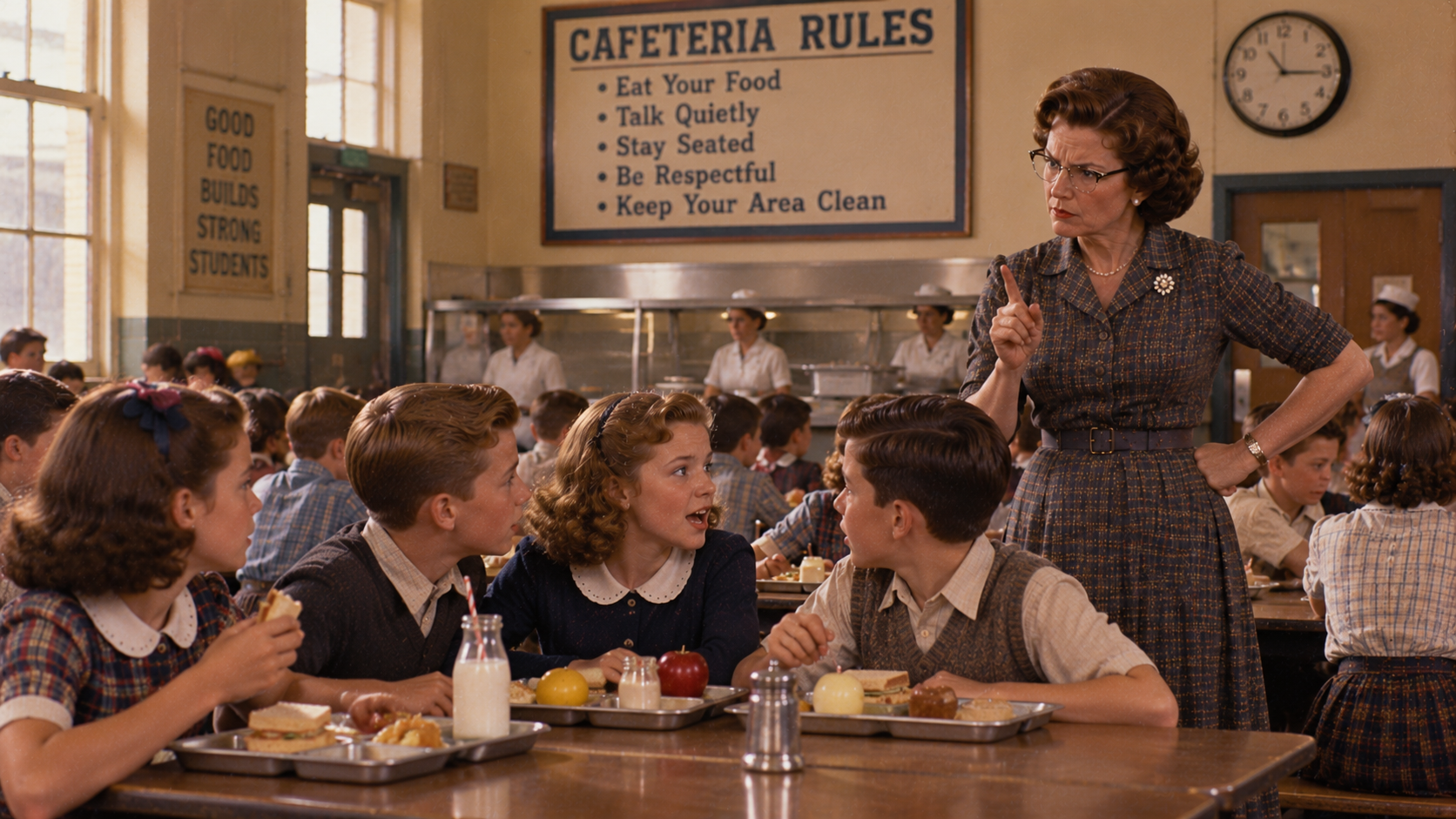
The school cafeteria was not necessarily a place for lively conversations and relaxed meals. Students in some schools had assigned seating, limited talking privileges, and strict expectations about finishing their food. Teachers or lunchroom monitors supervised tables, reminding children to sit properly and use good manners. Some children were pressured to clean their plates, even when they disliked what was being served. The smell of cafeteria meatloaf, the clatter of metal trays, and the watchful eyes of adults made lunchtime a surprisingly structured part of the school day.
15. Students Could Be Punished for Challenging a Teacher
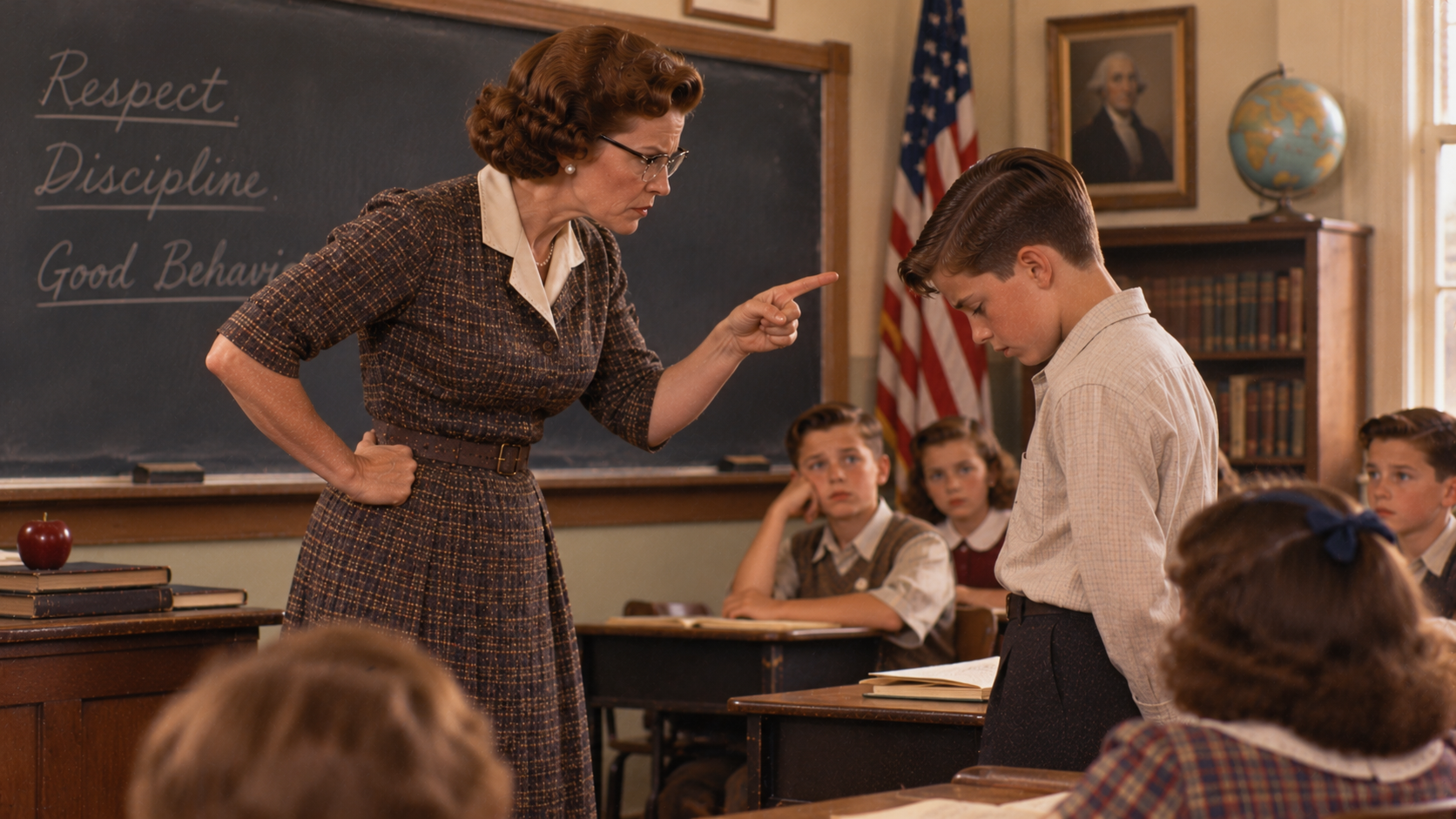
Disagreeing with a teacher could be interpreted as disrespect, regardless of how politely a student expressed themselves. In many 1950s classrooms, adults were expected to have the final word, and students were taught to accept instructions without argument. Questioning a grade, challenging a classroom rule, or defending oneself against an accusation could lead to additional discipline. Parents often supported teachers’ authority rather than immediately questioning their decisions. The relationship between students and educators was generally more hierarchical than the open communication encouraged in many schools today.
16. School Dances Had Strict Rules About Physical Contact
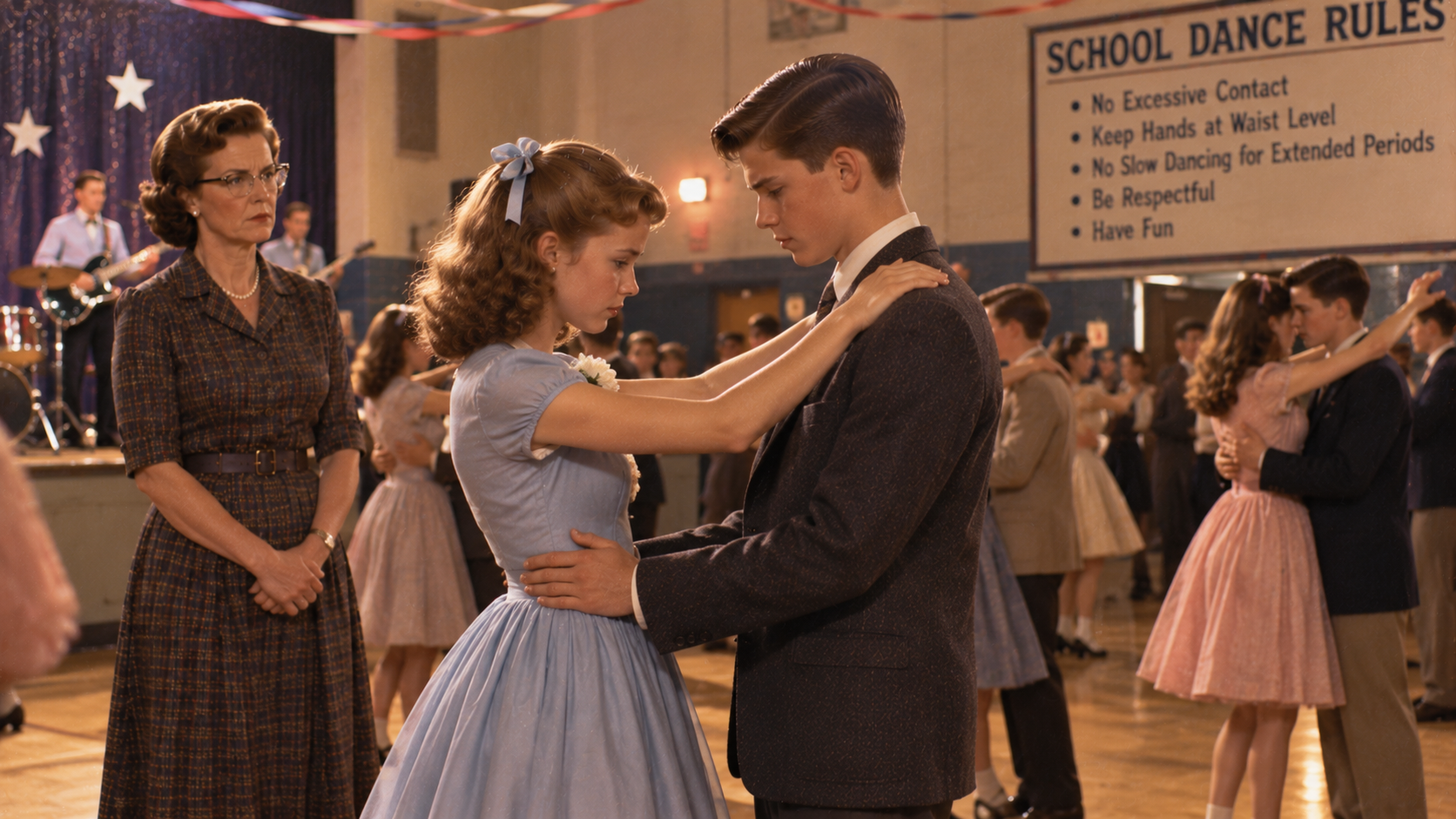
For teenagers in the 1950s, a school dance offered an exciting chance to hear popular music and spend time with someone special. However, chaperones often kept a close watch on the dance floor. Some schools required couples to maintain a respectable distance, discouraged certain dance styles, and prohibited movements considered too suggestive. As rock and roll gained popularity, dances associated with the new music sometimes attracted particular scrutiny. Students hoping to impress their crushes had to navigate both teenage nerves and adults determined to preserve proper behavior.
17. Students Could Be Required to Participate in Religious Activities
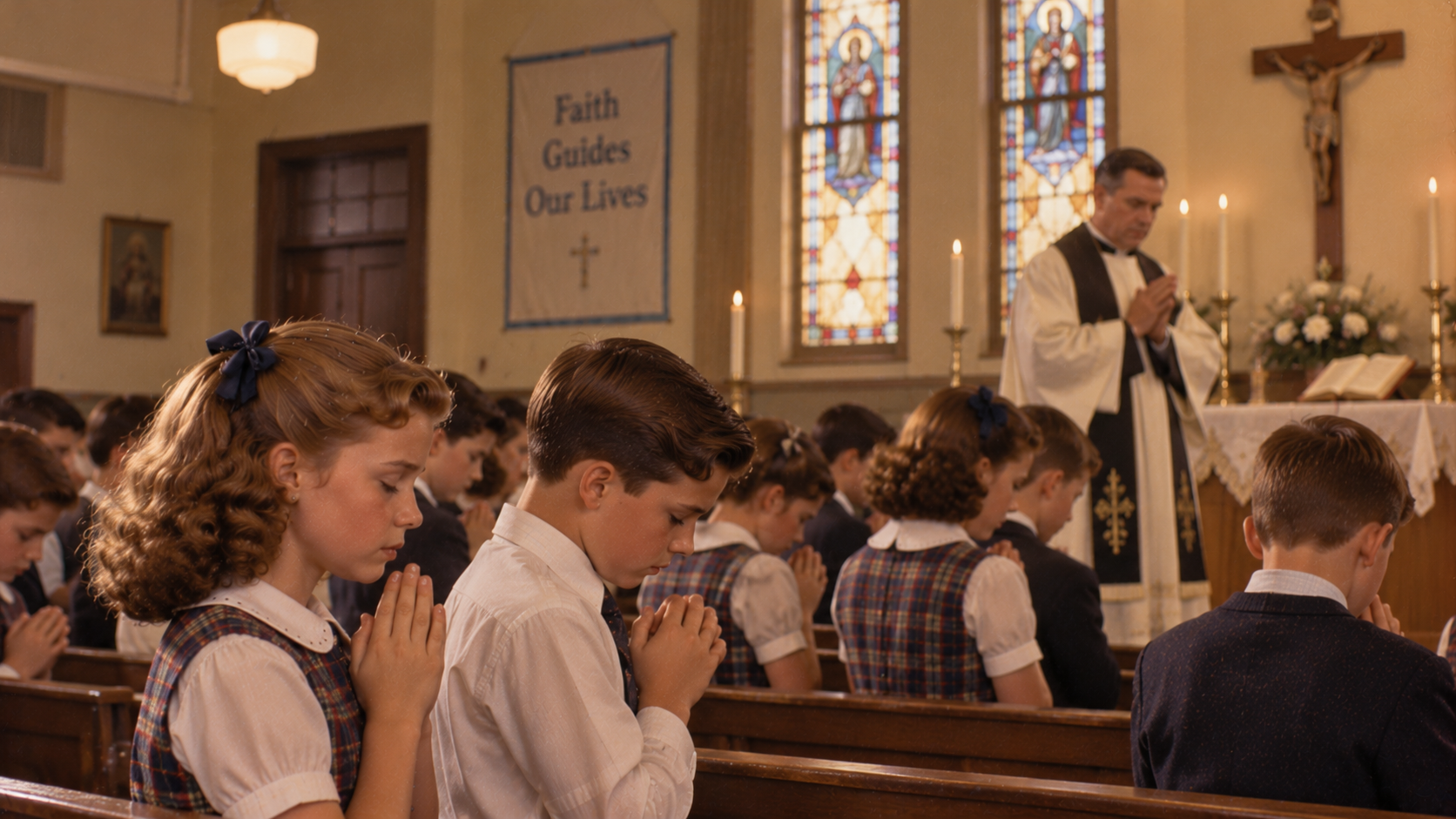
In some public schools during the 1950s, the school day began with a prayer or Bible reading led by a teacher. Religious observances were familiar routines in many communities, and students could feel significant pressure to participate even when their families practiced different faiths or none at all. These activities became the subject of major constitutional disputes in the following decade. Supreme Court decisions in 1962 and 1963 restricted school-sponsored prayer and devotional Bible reading in public schools, marking an important shift in the relationship between religion and public education.
18. Students Could Be Separated by Race
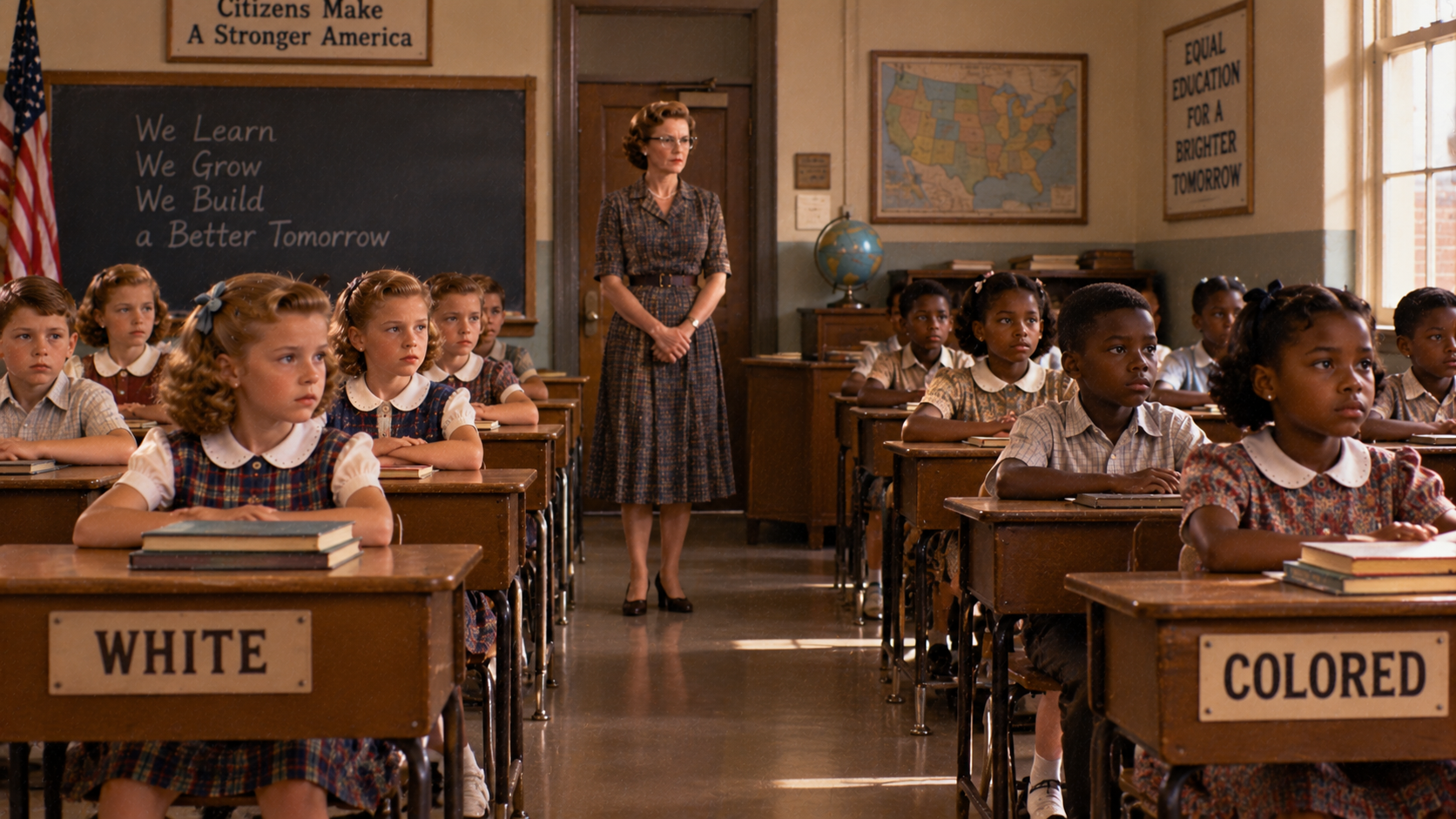
One of the most troubling realities of American schooling in the 1950s was that racial segregation remained a formal policy in many communities. Black and white students attended separate schools in parts of the country, often with unequal buildings, textbooks, transportation, and educational resources. The Supreme Court’s landmark 1954 decision in Brown v. Board of Education declared racial segregation in public schools unconstitutional, but resistance to integration continued for years. For students today, the fact that children could be assigned to different schools because of their race is a powerful reminder of how deeply discrimination once shaped everyday education.
More Related Notes
• 18 Classroom Photos That Show How Much School Has Changed
Step inside classrooms from decades past, when wooden desks, strict dress codes, and handwritten assignments shaped everyday school life. These nostalgic photos reveal just how much education and classroom expectations have evolved.
• 20 School Photos That Show Just How Much Has Changed Since the ’70s
Revisit school days before laptops and digital classrooms, when playground equipment, cafeteria lunches, and traditional teaching methods created a very different experience for students.
• 15 Activities Kids Did in the 60s That Would Shock Kids Today
Discover the childhood routines that once seemed completely normal, from walking to school alone to spending afternoons outdoors without constant supervision. These forgotten experiences show how much expectations for children have changed.