Home maintenance used to be a much more physical part of everyday life. Before automatic heating, electric appliances, and modern building materials became common, keeping a house comfortable meant doing far more than changing a filter or calling a repair service. Ordinary homeowners, domestic workers, and skilled tradespeople spent hours tending fires, carrying water, repairing windows, and protecting buildings from the weather.
Many of these jobs haven’t disappeared completely, especially in older American homes. But looking back at how families maintained their houses in the nineteenth and early twentieth centuries reveals a world of constant chores and repairs. These 18 once-familiar routines show just how much work went into keeping a roof overhead.
1. Keeping the Stove Burning All Day
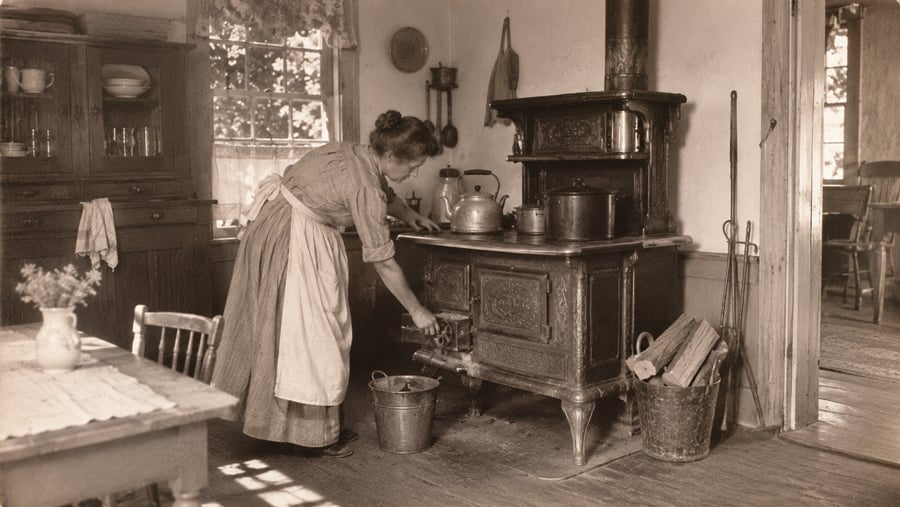
Before turning a dial could warm a kitchen, someone had to keep the stove fire going. Wood and coal stoves required clearing ashes, arranging kindling, adjusting airflow, and adding fuel throughout the day. Cooking dinner and heating water could demand different temperatures, which meant constantly tending the fire. At Connecticut’s Weir Farm around 1900, managing the kitchen stove was a regular responsibility for the household cook. It was the kind of daily work that modern appliances have made easy to overlook.
2. Carrying Every Bucket of Water Into the House
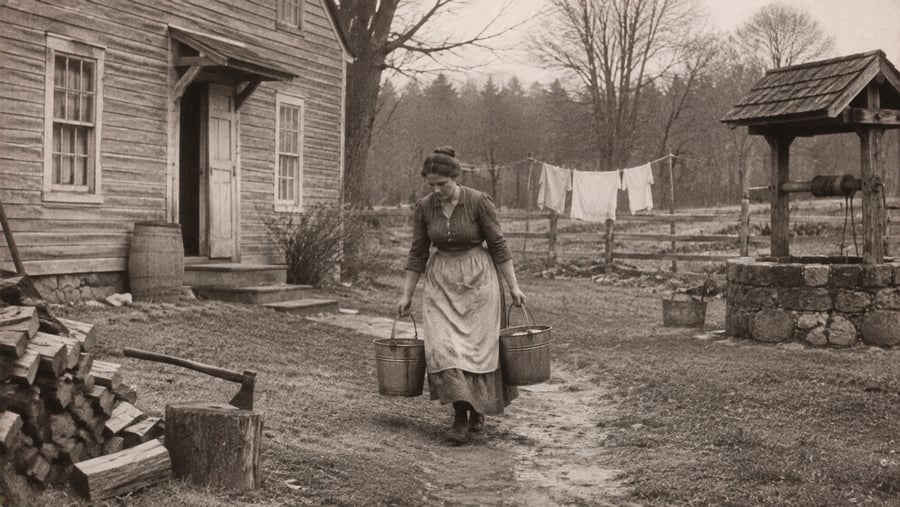
Running water is easy to take for granted until you imagine carrying every gallon yourself. Before indoor plumbing became common, water for cooking, cleaning, and laundry often had to be hauled from an outdoor well or pump. The work could be astonishingly demanding. A nineteenth-century Massachusetts laundry worker named Catherine Lynch reportedly carried about 25 pails of water for a single load of laundry, with each pail weighing roughly 21 pounds. Even basic household cleaning could begin with an exhausting trip outside.
3. Pumping Water by Hand Every Time It Was Needed
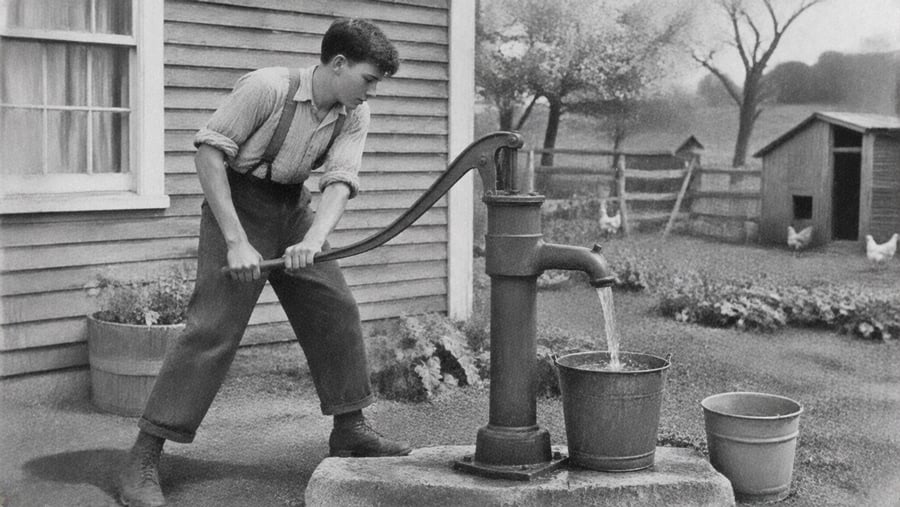
Having a hand pump near the house was an improvement over lowering a bucket into a well, but it still required physical effort. Someone had to work the handle repeatedly to fill a container, whether the water was needed for drinking, washing, or cooking. At Harry Truman’s family farm in Missouri, a windlass and bucket were used before a pump was installed in 1912. That pump made collecting water more convenient, but it didn’t eliminate the work involved.
4. Emptying the Icebox Drip Pan Before It Overflowed
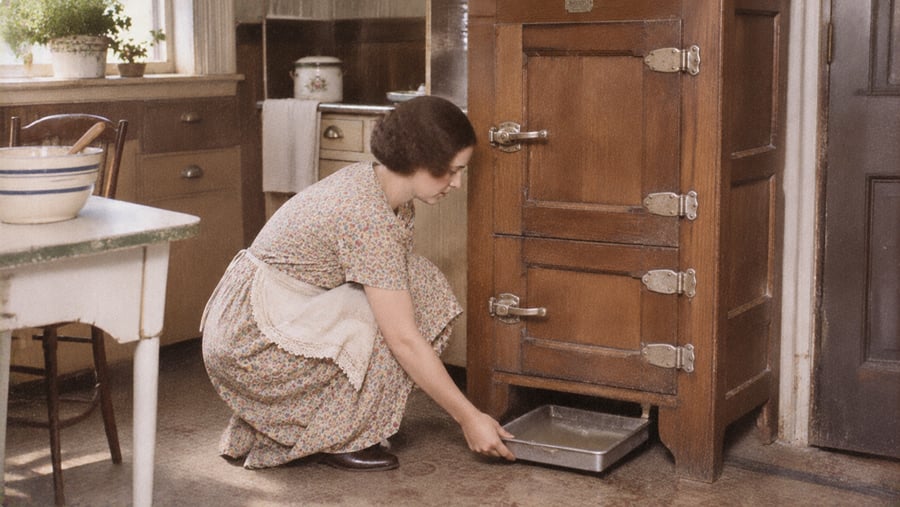
Before electric refrigerators took over American kitchens, keeping food cold required a little more planning. Iceboxes depended on large blocks of ice that gradually melted, leaving water in a drip pan underneath. Someone had to remember to empty that pan, or the kitchen floor could end up wet. Fresh ice also needed to be delivered or collected regularly. Iceboxes remained in use well into the 1930s, making this one of those household routines that disappeared surprisingly recently.
5. Sweeping Soot Out of the Chimney
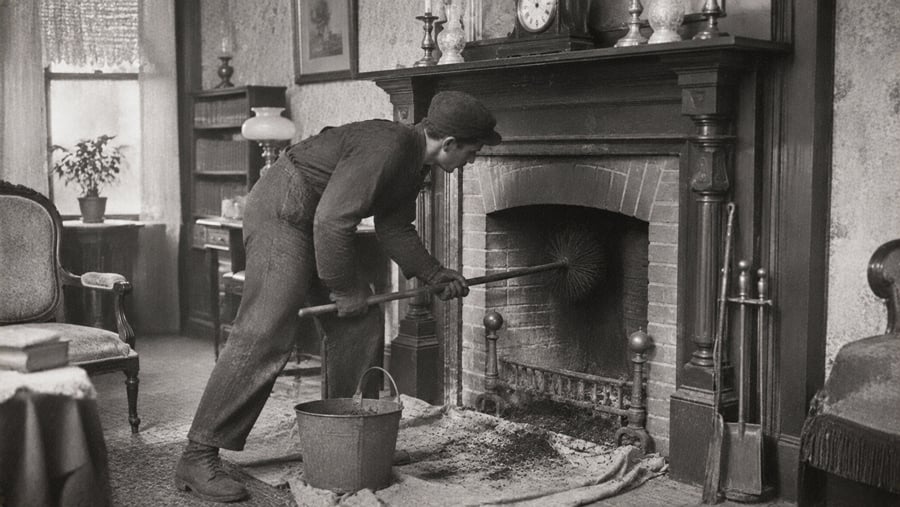
A fireplace could make a home warm and inviting, but it also left behind soot and combustible deposits inside the chimney. Regular cleaning was an important part of keeping wood-burning heating systems safe. Chimney sweeps used specialized brushes and tools to remove buildup, a messy job that often covered workers in black dust. The practice still matters in homes with working fireplaces and wood stoves, but it was once a much more familiar part of household maintenance.
Trending on Wealth Gang


6. Whitewashing Exterior Walls Again and Again
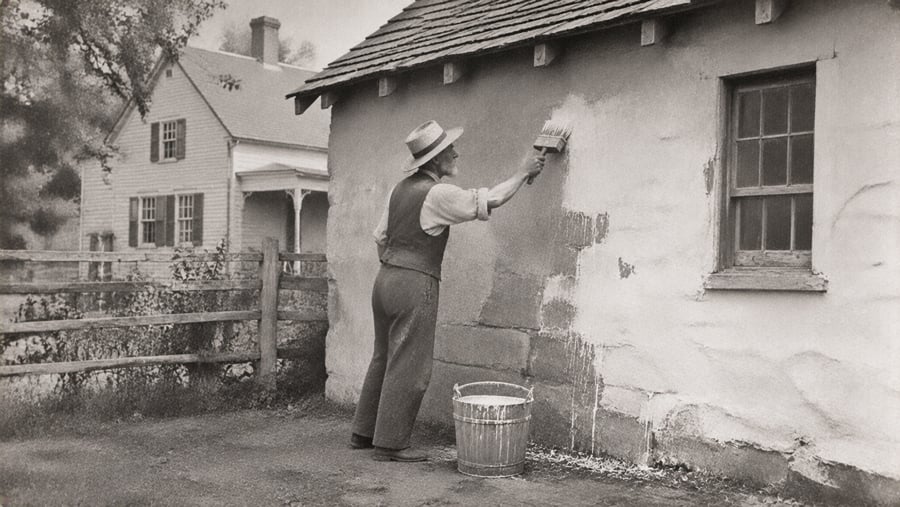
Before modern exterior paints became widely available, limewash was a common way to brighten and protect certain building surfaces. Made primarily from lime and water, it created a pale finish that could look beautiful when freshly applied. The problem was that exposure to rain and weather gradually wore it away. Some surfaces needed another coat every year, turning whitewashing into a recurring chore rather than a one-time improvement.
7. Scraping Old Paint Before Repainting Wooden Siding
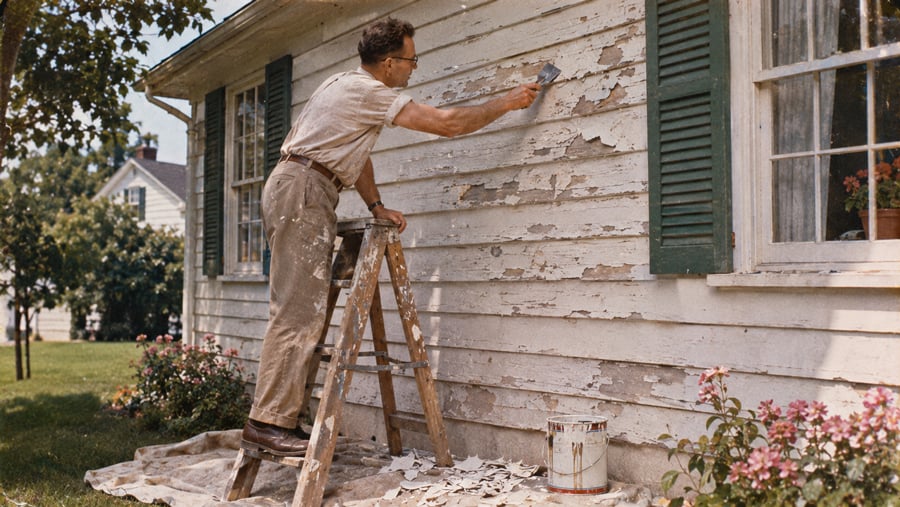
Repainting a wooden house has never been as simple as opening a can of paint. Loose and peeling layers had to be removed, damaged boards repaired, and exposed surfaces prepared before fresh paint could go on. Without modern power tools, much of that preparation depended on hand scrapers and sandpaper. It was slow, repetitive work that could stretch across several weekends. Even today, maintaining historic wooden siding often requires the same careful approach.
8. Resealing Windowpanes With Fresh Putty
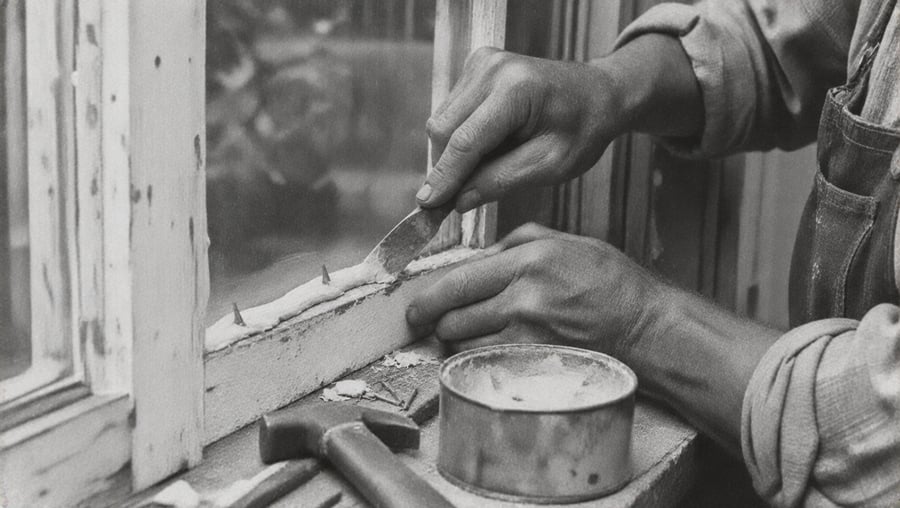
Older wooden windows often held individual glass panes in place with glazing putty. Over time, that material could dry out, crack, or separate from the frame, allowing drafts and moisture to sneak inside. Fixing the problem meant carefully removing the damaged putty and pressing fresh glazing compound around the glass. It was delicate work that required patience and a steady hand. Today, many homeowners simply replace a damaged window unit, but historic windows still depend on these traditional repairs.
Sign up for our newsletter
9. Replacing the Hidden Cords Inside Old Windows
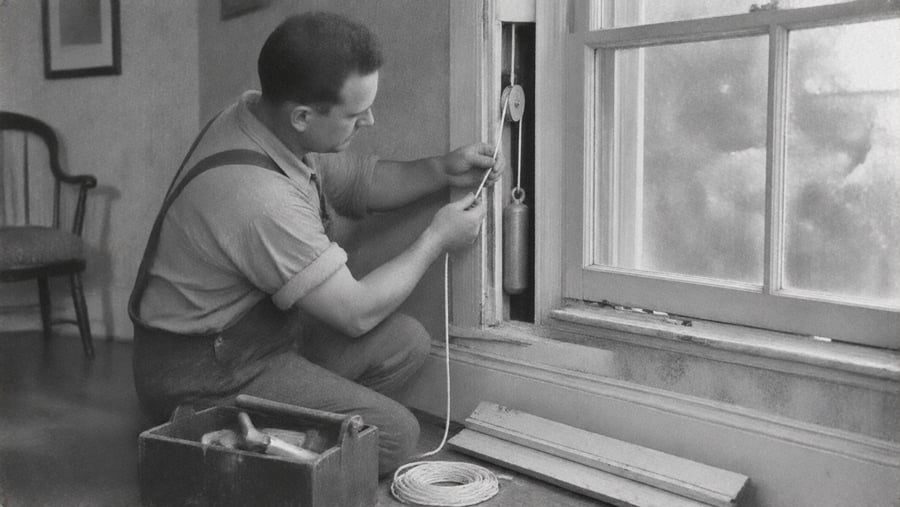
Many traditional double-hung windows relied on cords and counterweights concealed inside the frame. When a cord snapped, the window could become difficult to lift or refuse to stay open. Repairing it wasn’t a matter of tightening a screw. Someone had to access the hidden weight pocket, thread a replacement cord through the pulley, and reconnect the mechanism. Sometimes that meant removing part of the interior trim. It was one more small household repair that required knowing how the house worked.
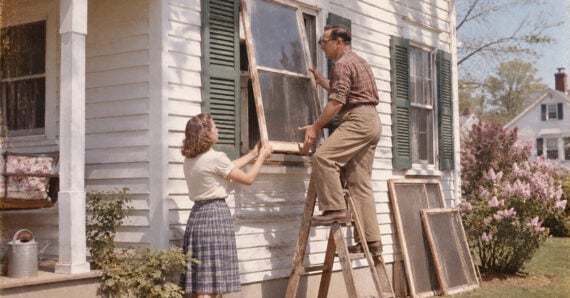
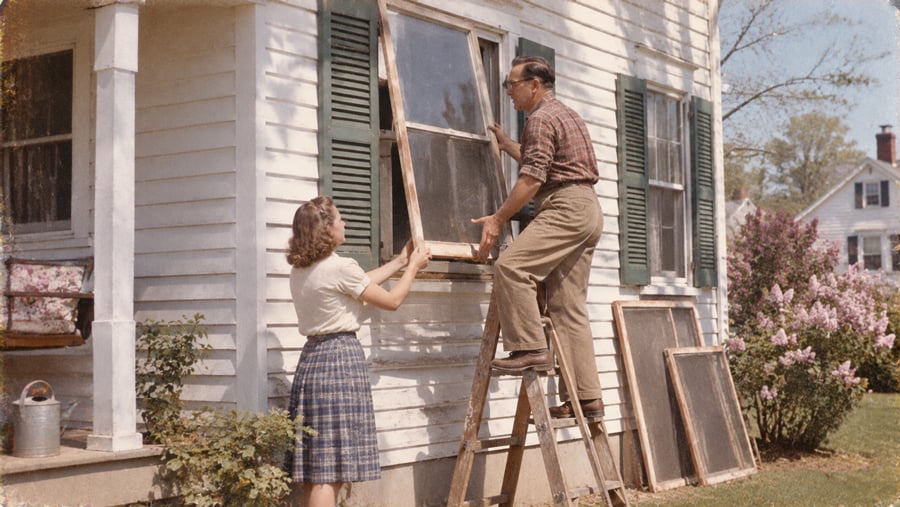
10. Swapping Storm Windows and Screens Every Season
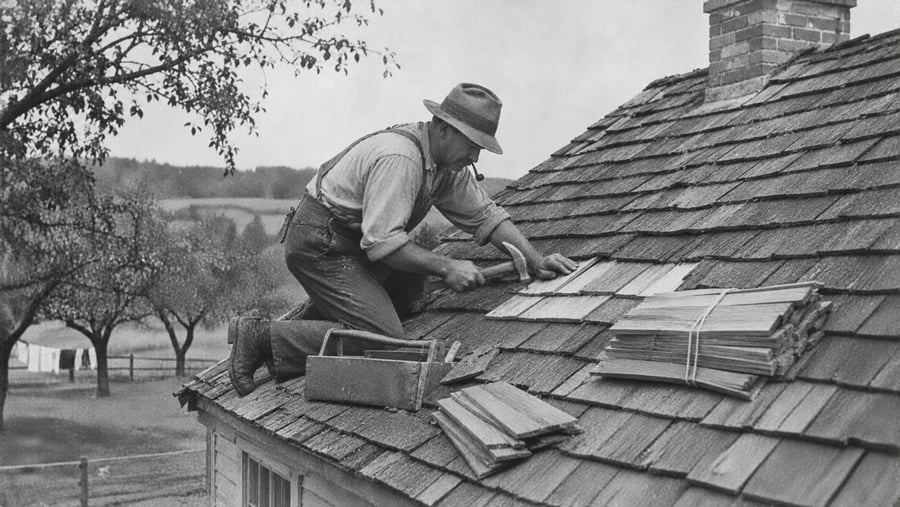
Wooden shingle roofs could be attractive, but individual shingles eventually split, loosened, or deteriorated after years of exposure. Repairing the roof meant finding damaged sections and replacing them with pieces that matched the original size and installation pattern. In historic buildings, this could require specially prepared wooden shingles rather than ordinary modern materials. The work demanded careful attention to detail, especially when keeping water out depended on every overlapping piece fitting correctly.
12. Clearing and Repairing Rain Gutters by Hand
Keeping rainwater away from a house was especially important when moisture could damage wooden walls, foundations, and masonry. Older gutters needed regular inspection, clearing, and repairs when joints leaked or sections deteriorated. Leaves and debris could block the flow, while damaged downspouts sent water where it didn’t belong. Even though gutters still require maintenance today, older systems often involved more hands-on repairs and careful attention to the building materials beneath them.
13. Mixing Mortar to Repair Crumbling Brickwork
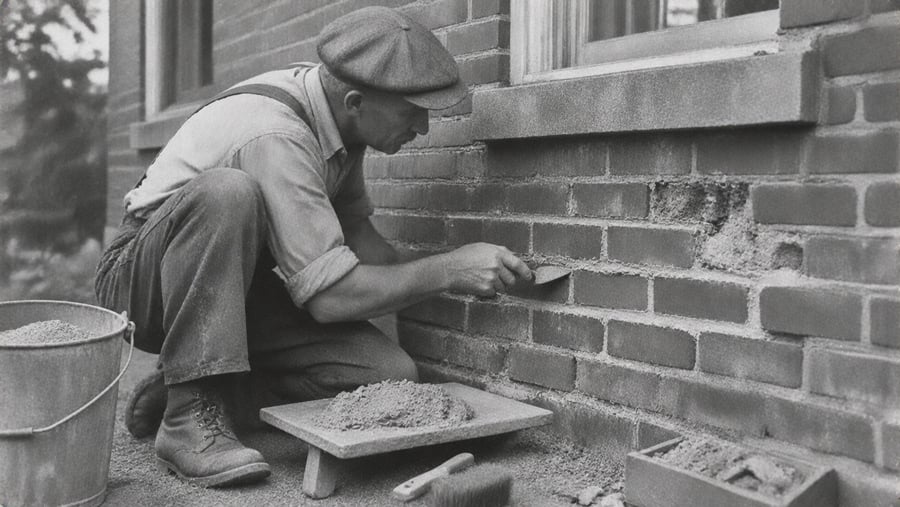
When mortar between bricks began to crack or crumble, homeowners and masons had to repair the joints before moisture caused more serious damage. The process, known as repointing, involved removing weakened material and pressing fresh mortar into the gaps. Older buildings often used lime-based mixtures prepared from lime putty and sand. Choosing the right mortar mattered because overly hard modern mixtures could damage historic bricks. It was a job that required both physical effort and a surprising amount of specialized knowledge.
14. Patching Cracked Plaster Walls in Several Layers
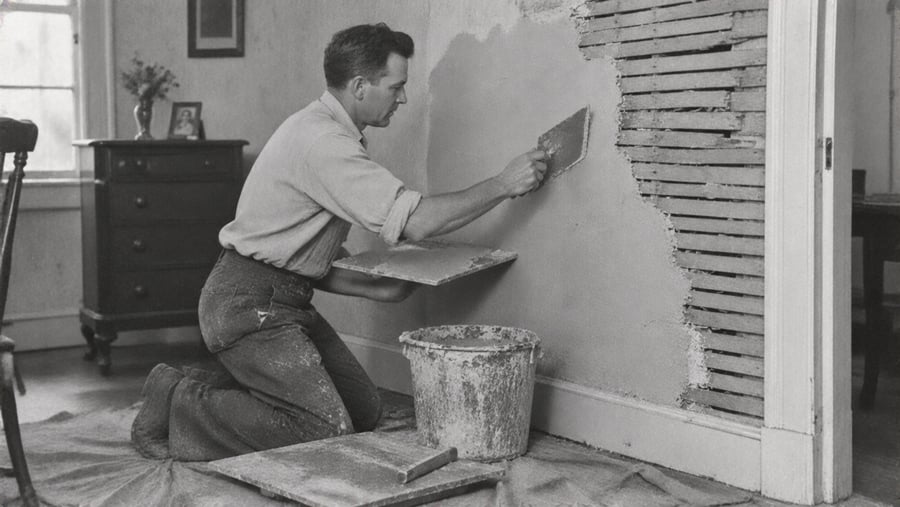
Before drywall became the standard finish in many American houses, walls and ceilings were commonly built with plaster over wooden or metal lath. Repairing a damaged section could involve securing loose material, preparing the surface, and applying new plaster in multiple layers. Traditional plasterwork often used separate scratch, brown, and finish coats, making substantial repairs a careful process. A crack that looks minor today could once mean a surprisingly involved home improvement project.
15. Cleaning and Refilling Oil Lamps for Everyday Light
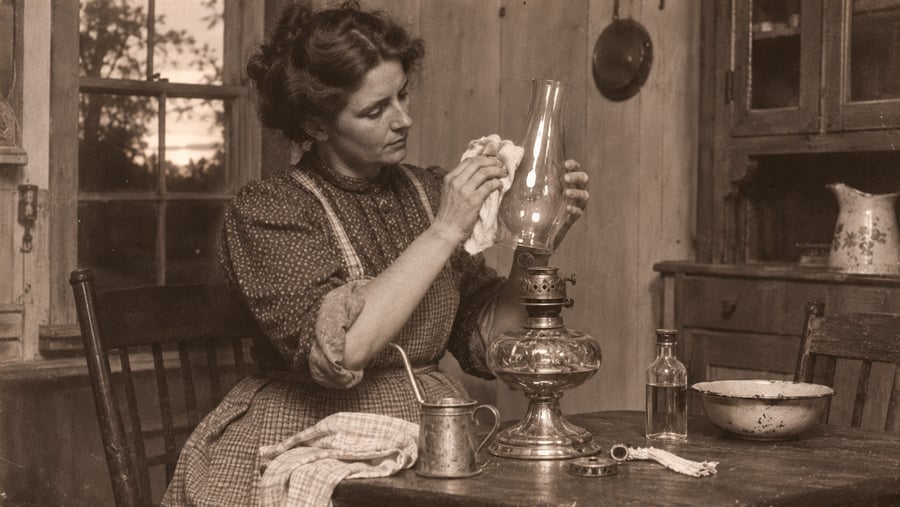
Before electric lighting became common, keeping a room illuminated involved a routine of its own. Kerosene and oil lamps needed fuel, their wicks required adjustment or replacement, and glass chimneys could become clouded with soot. Someone had to clean and maintain the lamps to keep them burning properly. It was easy to forget how much attention a simple evening light required until electric switches made illumination nearly effortless.
16. Repainting and Repairing Wooden Porches
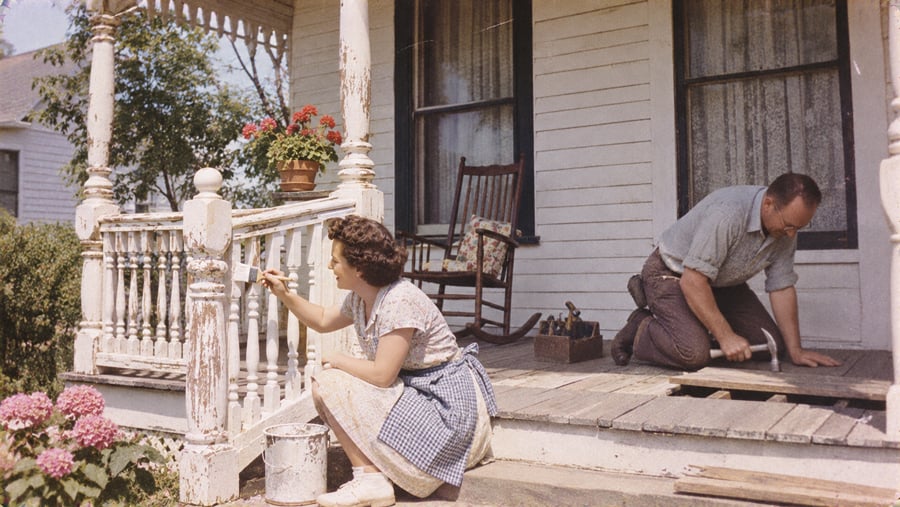
The beautiful wooden porches found on many nineteenth-century American homes came with a long list of maintenance responsibilities. Floorboards, railings, steps, and decorative posts were constantly exposed to rain, sunlight, and wear. Peeling paint and deteriorating wood needed regular attention, sometimes every year or two for exposed areas. Keeping a porch in good condition could mean scraping, repainting, sealing, and replacing individual boards. Those welcoming front porches required considerably more work than their appearance suggested.
17. Refilling the Gaps Between Logs in Old Houses
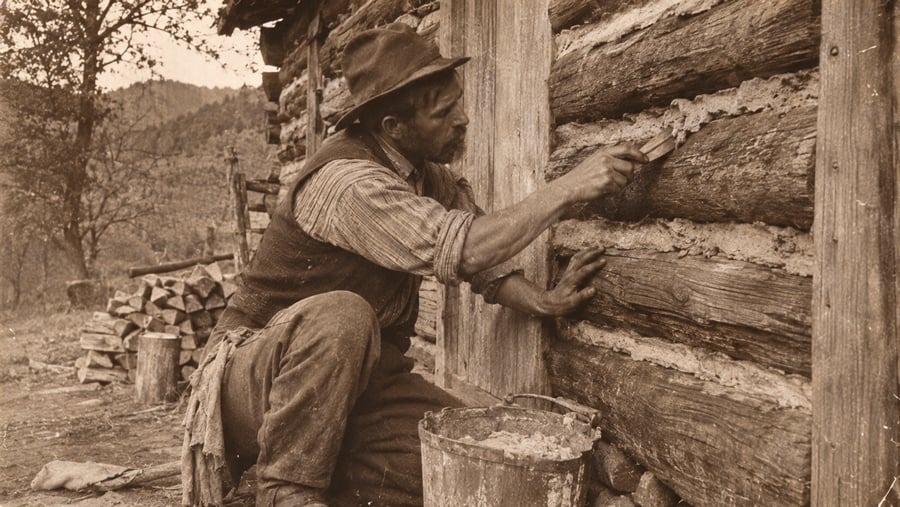
Traditional log homes needed more than sturdy timbers to keep the weather out. Gaps between logs were filled with materials known as chinking and daubing, which helped block drafts and moisture. Over time, those materials could crack, loosen, or fall away as the building settled and the seasons changed. Maintaining the walls meant inspecting the gaps and pressing replacement material into damaged areas. It was the kind of repair that directly affected how warm and dry a home felt.
18. Taking Carpets Outside and Beating the Dust Out
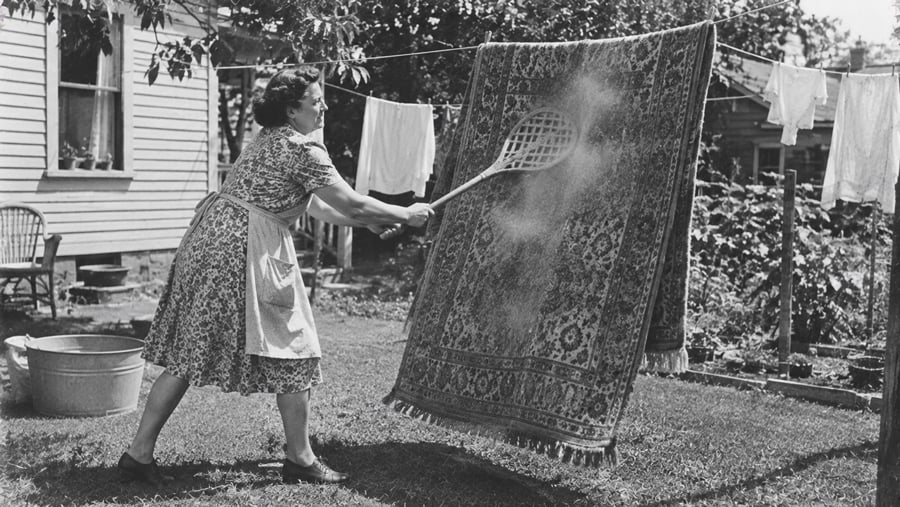
Before vacuum cleaners became common, cleaning a rug could turn into a major physical chore. Heavy carpets were carried outdoors, draped over a railing or clothesline, and beaten repeatedly to knock out accumulated dust. Sweeping floors with corn brooms was another routine part of household cleaning. Even in 1950, only about 51% of electrified American households owned an electric vacuum cleaner, according to the Smithsonian. It’s easy to see why a machine that removed dust without hauling furniture outside felt like such a remarkable improvement.
More Related Notes
Forgotten Spaces in 1970s and 1980s American Homes
From wood-paneled basements to formal living rooms, these once-familiar spaces reveal how American homes were designed and used before modern lifestyles changed everything.
18 Things Families Once Made at Home
Before store-bought convenience became the norm, families regularly made everyday essentials from scratch. These forgotten household traditions show how much time and effort went into ordinary domestic life.
17 Forgotten Features of 1950s American Homes
From built-in household conveniences to distinctive architectural details, 1950s homes had features that were once considered practical and modern. Many have since disappeared from American houses.